Transition Flashing
The joint between a metal roof and a flat addition flexes every day. Rigid flashing cracks there, and water runs down the shared wall. A flexible transition detail lets both roofs move without tearing it.

Commercial roof repair in Vail for metal and low-slope buildings along I-10, including the transitions where a metal building meets a flat-roof addition.
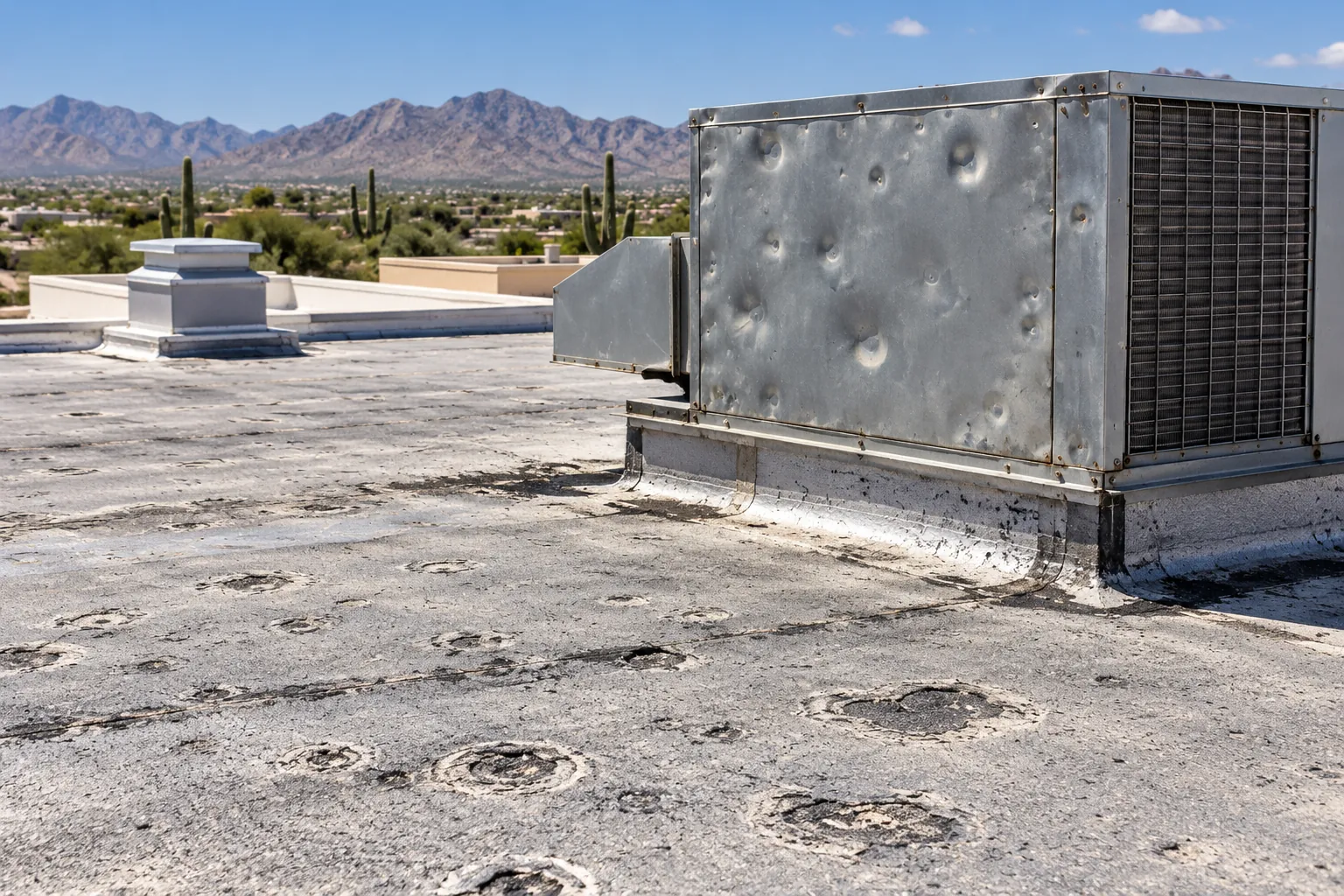
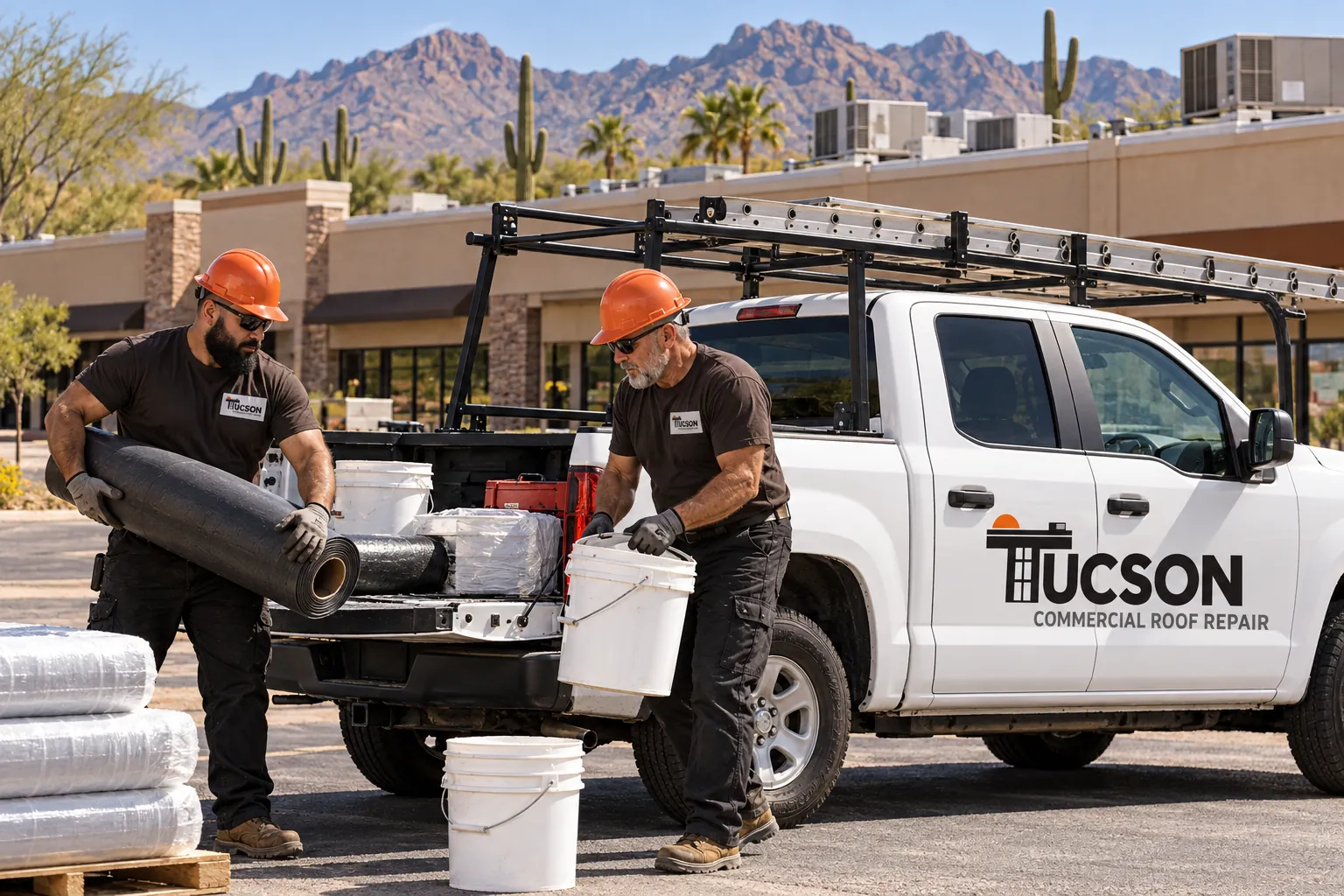
Commercial properties near I-10 in Vail often pair a metal building with a flat-roof office or later addition. The two roofs move differently in the heat, and the flashing that joins them takes the strain.
Leaks at that transition show up along the shared wall. We repair both roofs where they meet, then check each one on its own.
Mixed metal and low-slope buildings have their own weak points. These six come up most.
The joint between a metal roof and a flat addition flexes every day. Rigid flashing cracks there, and water runs down the shared wall. A flexible transition detail lets both roofs move without tearing it.
Metal panels that end above a flat roof need closures and flashing at their ends. Missing closures let wind-driven rain and birds in, and nests packed into the gap hold water against the panel ends.
Monsoon storms bring hail that bruises membranes and dents panels, and wind that lifts edge metal. Damage often shows on one roof type more than the other.
Screws on the metal section back out with heat cycling, worst at the eave and ridge rows, and each cracked washer becomes a drip.
Seams on the flat section near the transition sit in runoff from the metal roof above and open first. The metal roof can shed more water onto them in one storm than the flat roof collects on its own.
Where a metal roof sheds onto a flat roof or into a gutter above it, overflow pounds one spot of membrane every storm.
Fixing the joint between two roofs stops the leak each roof tends to blame on the other.
These three services cover most commercial buildings in Vail.
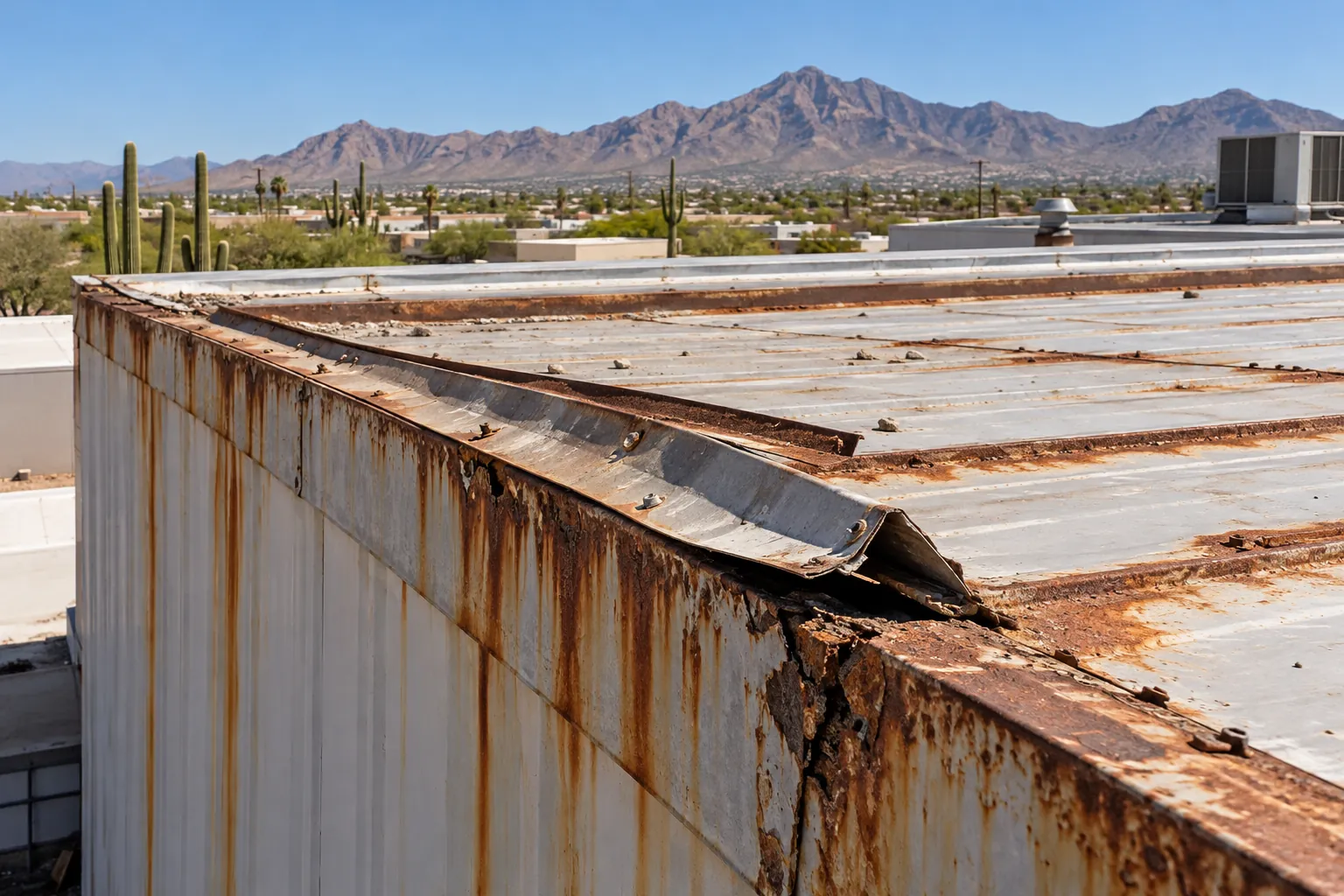
Metal buildings get screw, lap, trim, and panel-end repairs, matched to the existing profile and gauge.
Commercial metal roof repair for Vail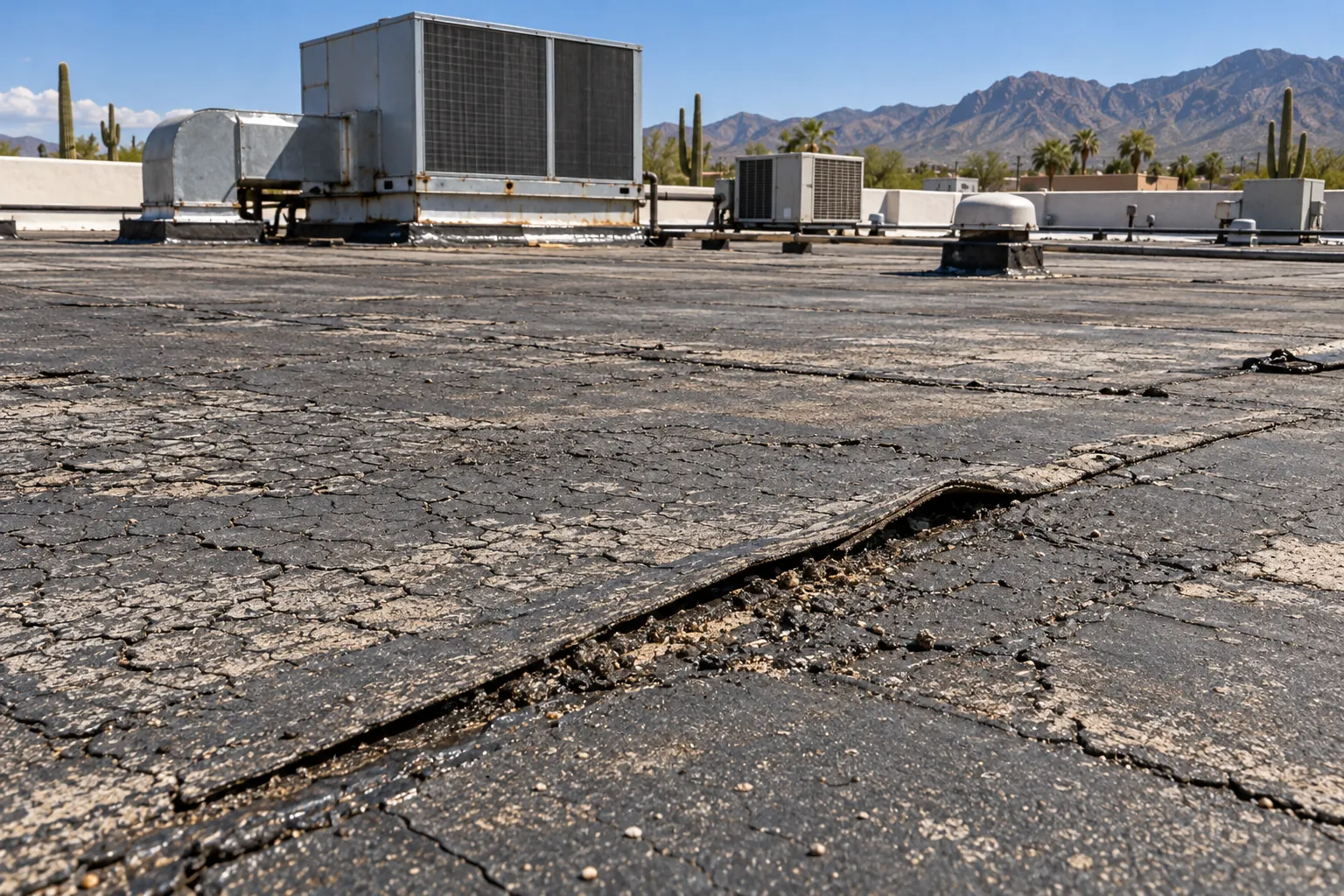
Flat additions and offices get seam, flashing, and drain repairs with membrane that matches the existing roof.
Flat roof repair for Vail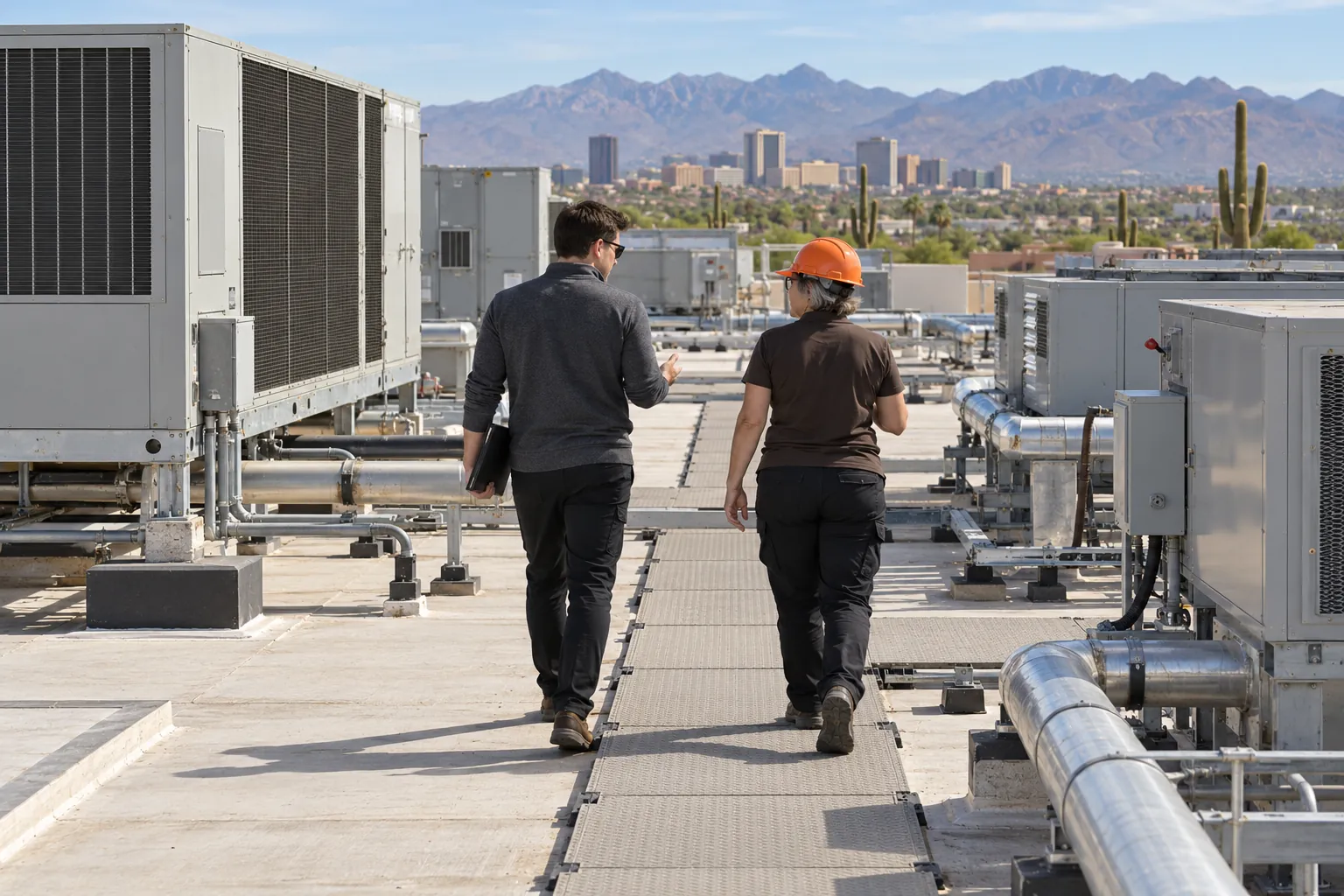
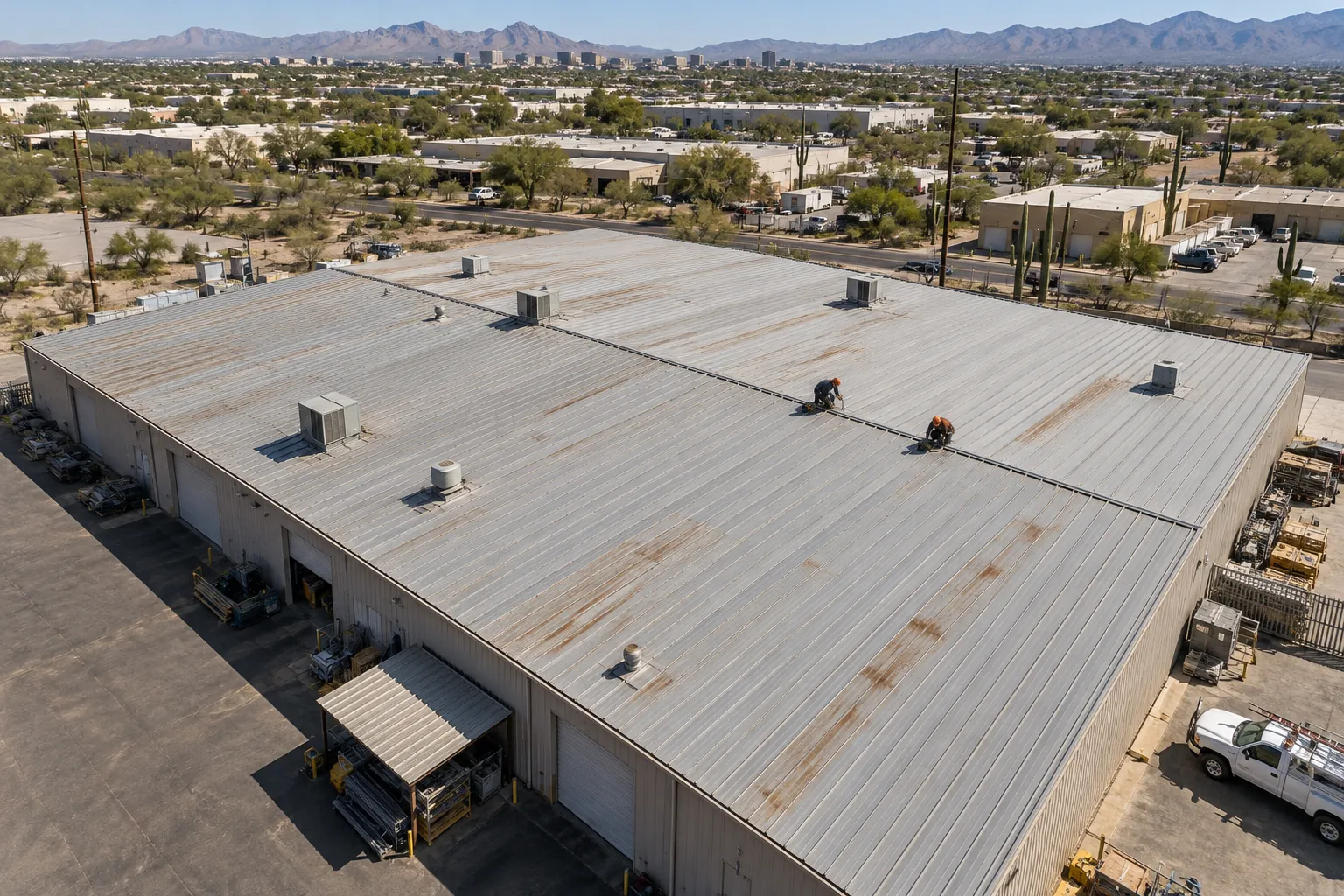
Larger plants and storage buildings along I-10 get sectioned repairs scheduled around shifts and shipping.
Industrial roof repair for Vail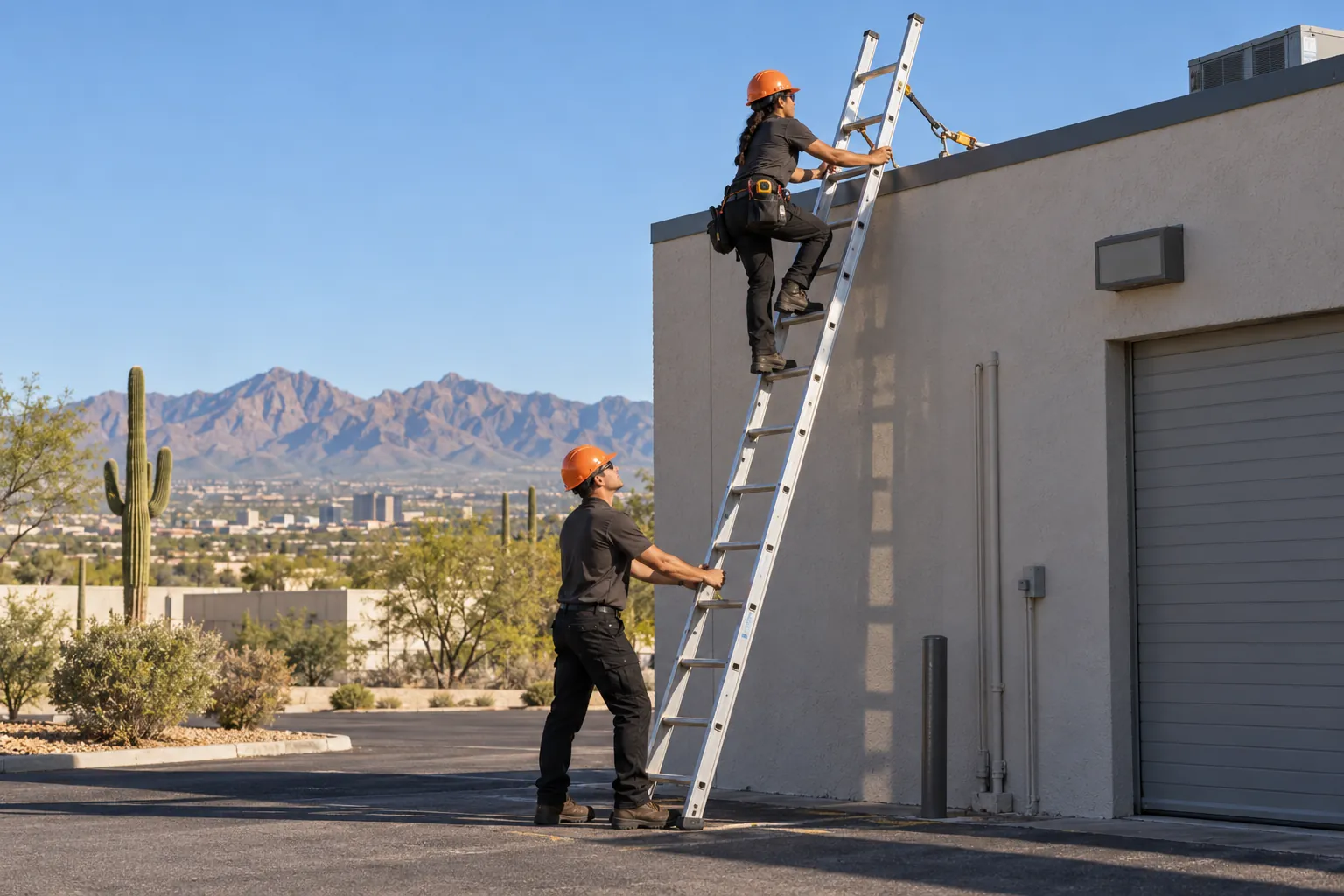
Leaks at a roof transition are among the most common here. Call with the address and we will check where the two roofs meet.
Mixed roofs get both systems inspected and repaired on one visit.
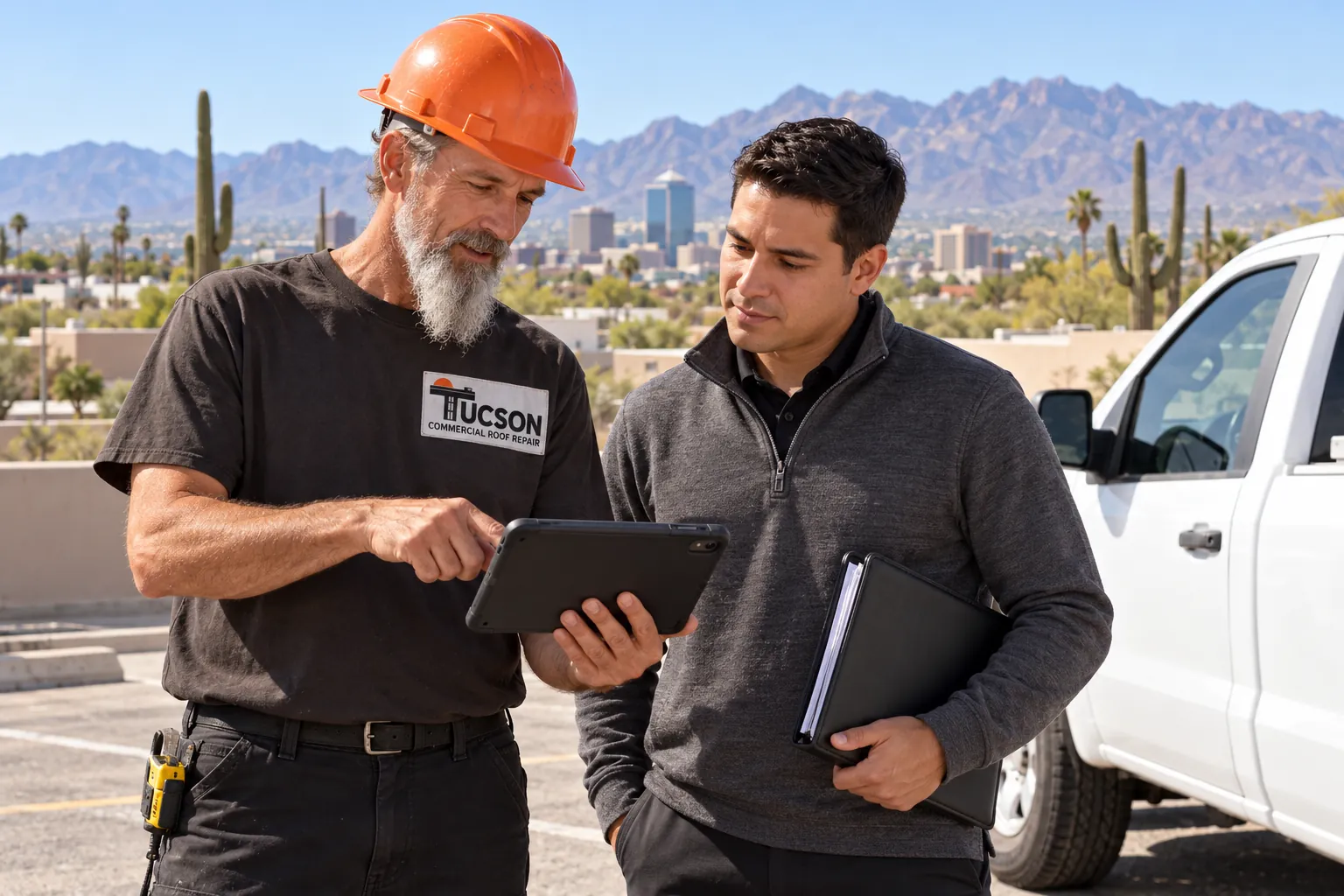
We walk the metal and flat sections, check the transition flashing, panel ends, fastener rows, and seams, and record any storm damage on both.
Both roofs go on one written scope, with the transition repair first since it often causes leaks on each side.
Transition flashing is rebuilt to allow movement, panel ends get closures, and screws, laps, and seams are repaired with matching material.
A water test runs along the transition and the shared wall, and photos record both roofs for your file.
Neighboring communities we also cover, each with its own roof types.
Southwest toward I-19, with farm and light industrial metal roofs.
Northwest along I-10 toward downtown, with masonry storefront roofs.
South past Sahuarita on I-19, with clubhouse, clinic, and retail roofs.
North across the city below the mountains, with hillside runoff at roof drains.
Pima County Development Services, because Vail is unincorporated. Confirm thresholds with the county before repairs reach the deck, drains, structural framing, or rooftop equipment supports.
Document it once the storm passes and the roof is safe. Photograph lifted edge metal, torn membrane, dented panels, and ceiling stains, note the storm date and when leaks started, and have the whole roof inspected. Keep receipts for temporary measures and report the claim to your insurer promptly, since policies set deadlines.
Because the transition flashing there flexes as the metal and flat roofs move differently in the heat. Rigid flashing cracks, and water runs down the shared wall.
Yes. Both systems go on one inspection and one scope, which keeps the transition from falling between two separate repairs.
Hail dents metal panels, which is usually cosmetic unless the finish cracks, and bruises or punctures flat membranes, which leaks. Both get checked after a storm.
Roof repairs go on between storms during monsoon season, and the post-monsoon check in early fall is a good time to catch storm damage before winter rain.
Only what needs work goes on the scope. Each roof gets its own findings, and the transition between them gets checked either way, since it serves both.
Shop bays under the metal section keep working during most repairs, and office work under the flat roof is planned around business hours. Material staging stays clear of overhead doors.
Request a free estimate or call with the address and where the leaks show up. We will inspect both roofs and where they meet.
Leave a name and number and we will call to talk through the leak or repair.
Or call now: (623) 310-0116