Rooftop Unit Curbs
Base flashing at the curb cracks with unit vibration and service traffic. Water runs down the curb wall and along the deck before it reaches a ceiling tile.

Commercial roof leak repair in Tucson that starts at the stain, works upslope to the entry point, and repairs the cause behind the drip.
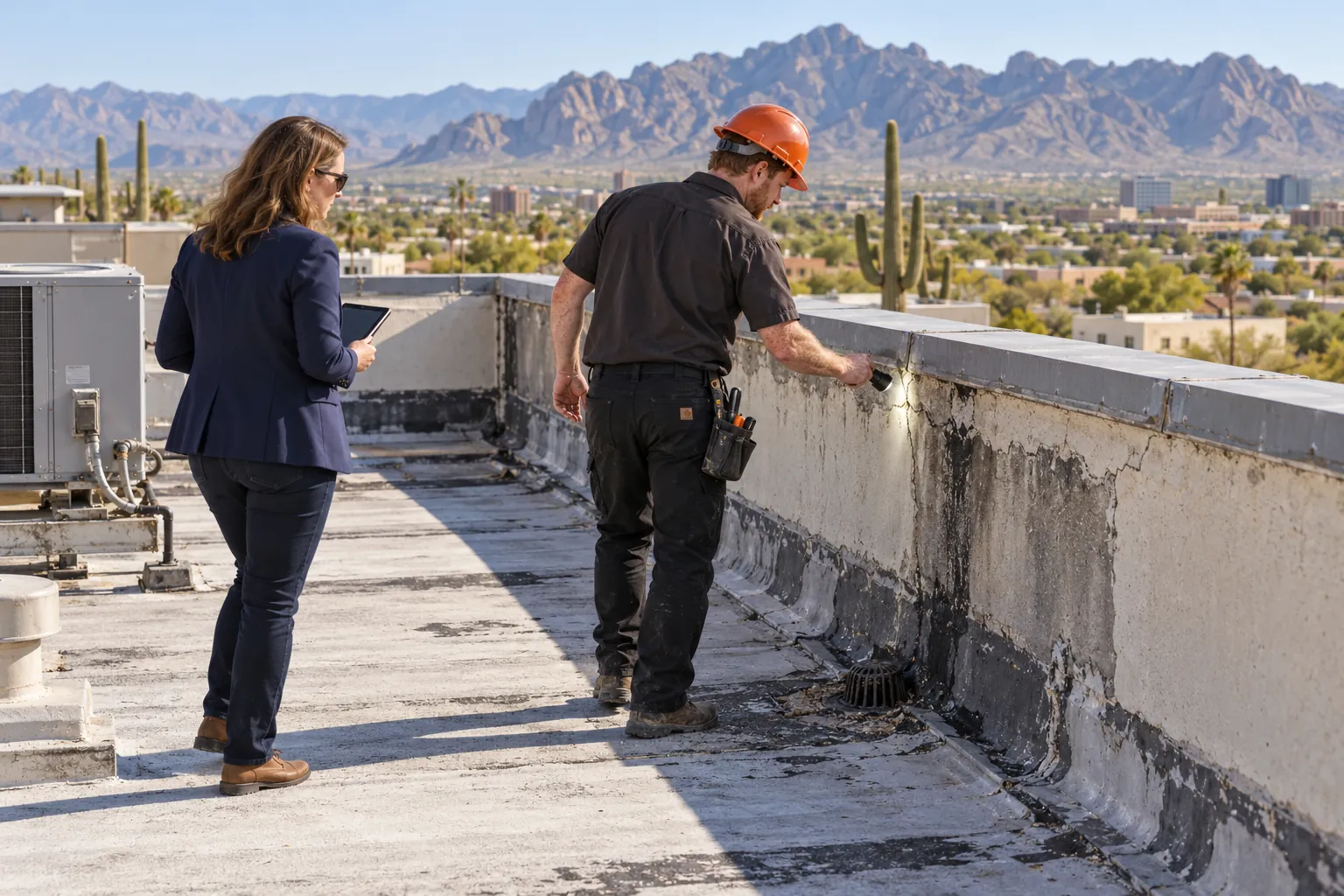
One leak point is a repair. Water across many rooms tells a different story.
The stain inside rarely sits under the hole. These six entry points cause most of the leaks we trace.
Base flashing at the curb cracks with unit vibration and service traffic. Water runs down the curb wall and along the deck before it reaches a ceiling tile.
Split rubber boots and pitch pans with shrunken filler let water straight down the pipe. The stain often shows up on a wall or around a light fixture.
An open seam lets water spread under the membrane across the insulation, so the stain can sit several feet from the seam that failed.
Water entering at a cracked parapet cap travels down inside the wall and appears along the exterior wall, sometimes a floor below.
Cracked domes, failed curb flashing, and worn hatch gaskets leak right around the opening, which makes them easy to confirm with a water test.
A cracked drain bowl or loose clamping ring leaks under the drain itself, often near the middle of a room, and gets worse when the drain clogs.
Leak work runs in two stages: control the water now, then repair the cause once it is confirmed.
| Repair | When It Fits | What It Involves |
|---|---|---|
| Temporary leak control | Rain is coming and the source is known | Tape the split seam, seal the open flashing, clear the clogged drain, or cover the puncture |
| Leak tracing | The stain sits far from any visible damage | Work upslope from the stain, water-test sections, and take moisture readings |
| Permanent repair | The entry point is confirmed | Replace the failed flashing, seam, boot, or panel with matching material |
| Wet area replacement | Insulation around the leak is soaked | Cut out wet insulation, replace it, and patch the membrane over it |
Finding the real entry point saves money and ends the repeat calls.
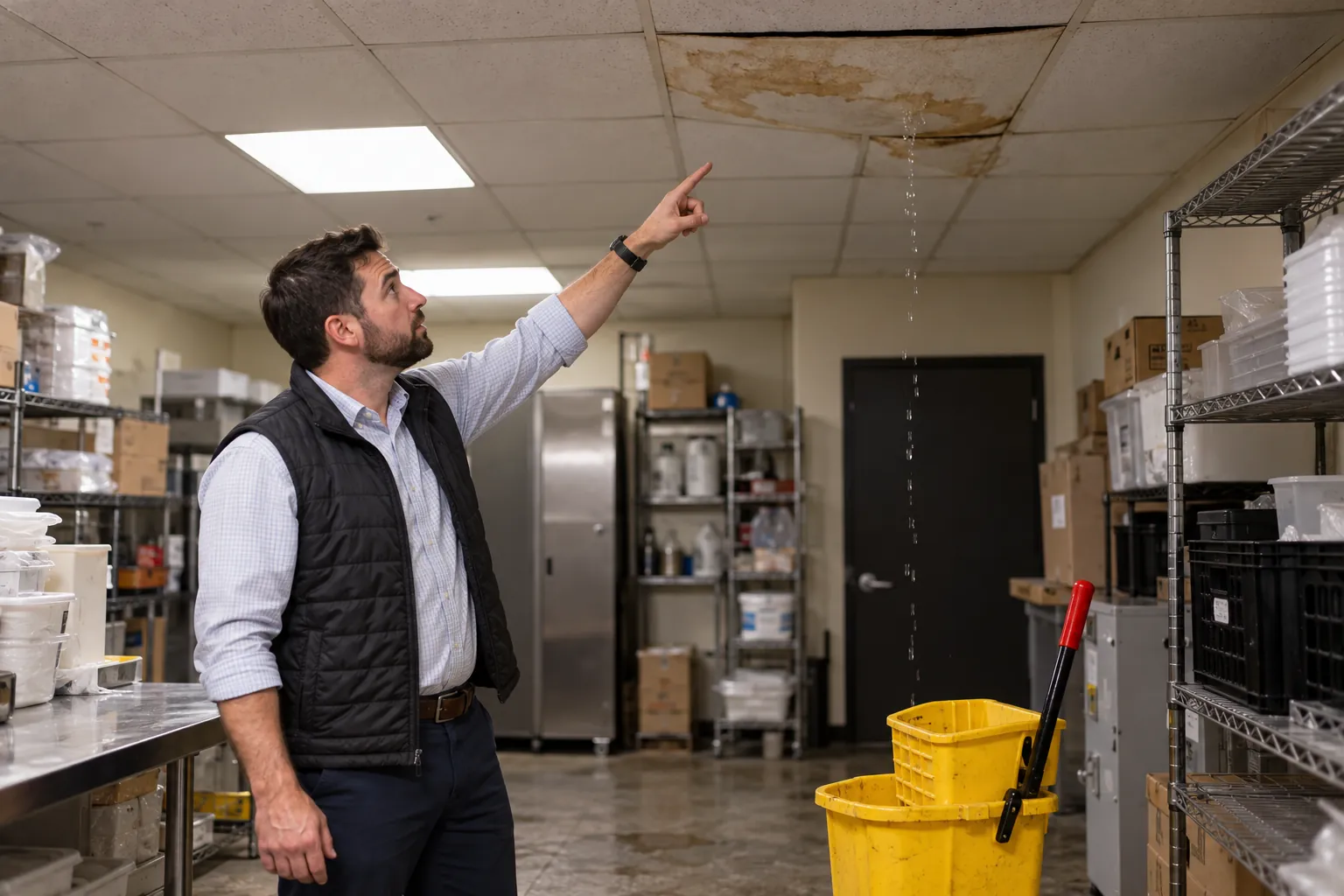
Take a photo of the stain and note when it drips. Call with that and the address so the inspection starts above the right room.
Tracing works backward from the stain. The repair happens once the cause is confirmed.


We start inside at the stain, then go up and check every curb, drain, seam, and penetration upslope of it, reading moisture as we go.
Suspected entry points are flooded one at a time with a hose while someone watches inside, so each test proves or rules out one detail.
If rain is coming, the leak source gets a temporary seal. The permanent repair uses matching material once the cause is confirmed.
After the repair, the area is tested again and the stain location is checked through the next rain, with photos of both.
Once the leak is traced, the fix usually falls under one of these.
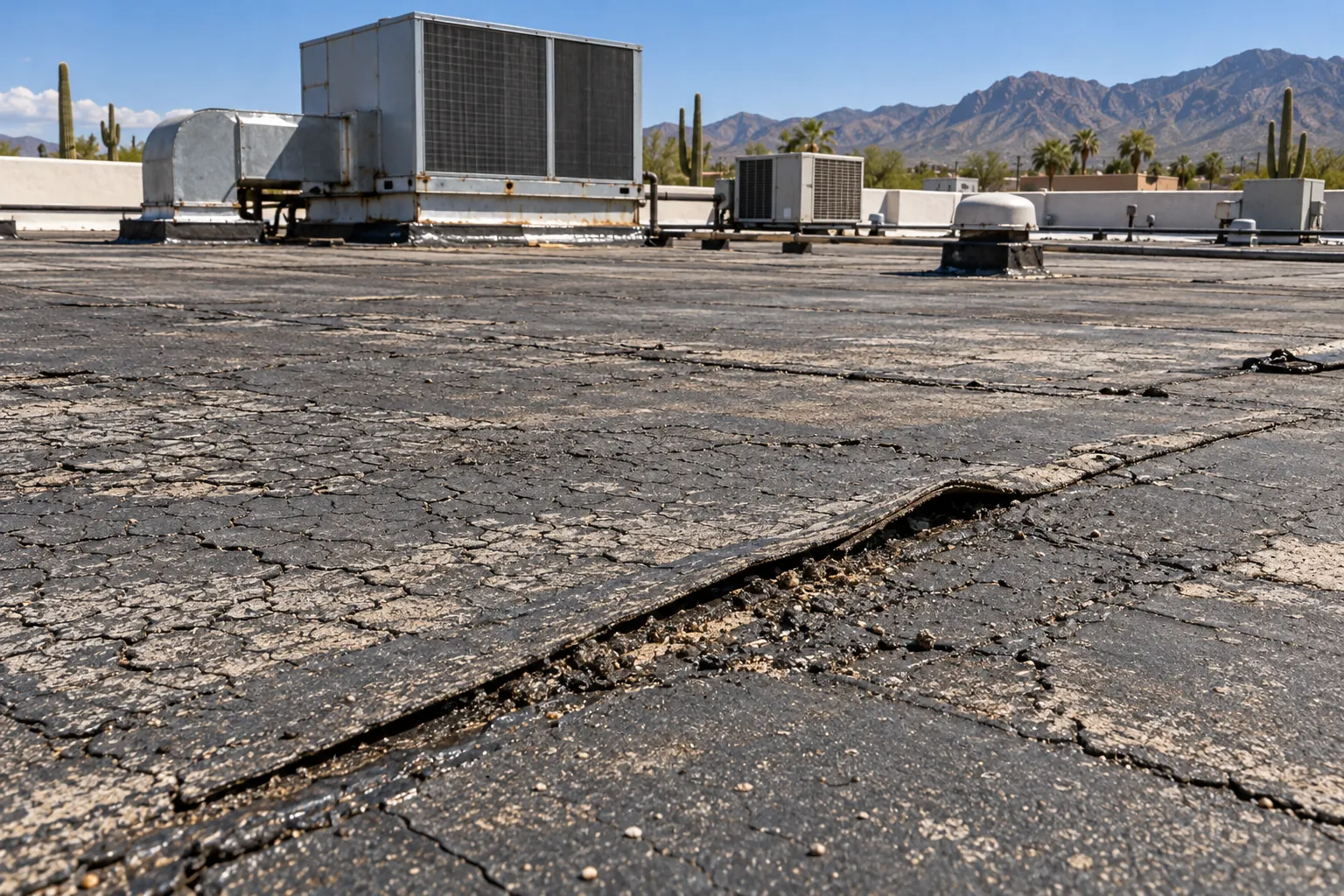
Most traced leaks on low-slope buildings end at a seam, curb, or drain on the flat roof, repaired with matching membrane.
Flat roof repair in Tucson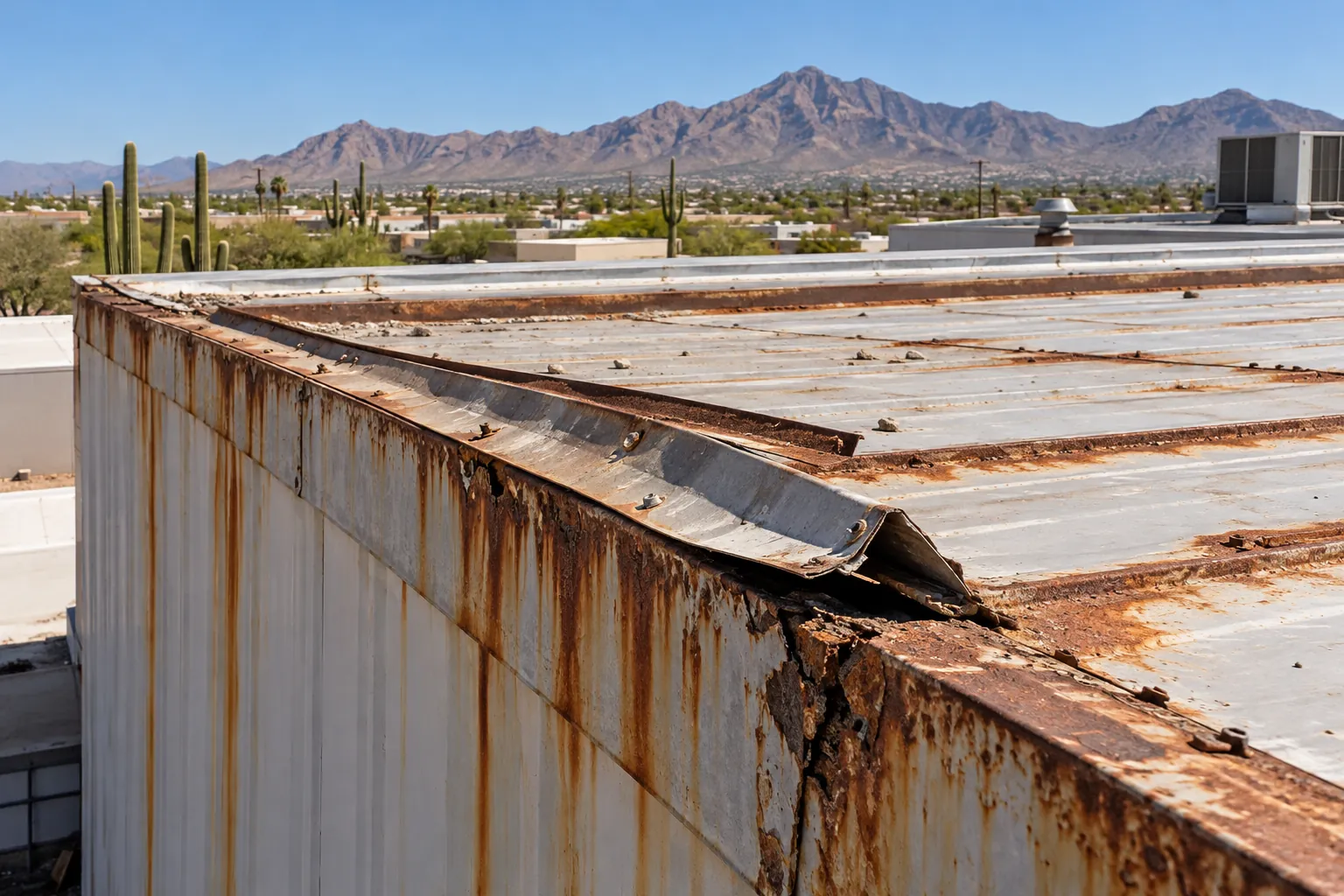
On panel roofs, the trail usually ends at a loose screw, an open lap, or a cracked skylight panel.
Commercial metal roof repair in TucsonBecause water travels before it drips. It gets in at a seam, flashing, or fastener and runs along deck flutes, insulation, or a joist until it finds a low spot or a gap in the ceiling grid. Tracing starts above the stain and works upslope past every curb, drain, and penetration.
Often, once the roof is dry enough to work on safely. Taping a split seam with a compatible product, sealing an open flashing, clearing a clogged drain, or covering a puncture limits interior damage. A temporary patch buys time, and the permanent repair follows once the cause is confirmed.
Moisture meters go on every leak call, read in a pattern around each stain and entry point. Infrared scans help on large flat roofs where wet insulation holds heat after sunset. Core cuts confirm what the readings show before anything is removed.
Wind-driven monsoon rain finds gaps that light rain misses, such as coping joints, upturned laps, and the backs of curbs. Water tests with a hose aimed the same direction as the storm wind recreate it.
Sometimes, but in small spots. A core cut a few inches across shows whether insulation is wet and how far the water spread, and it gets patched before we leave the roof.
Usually the patch landed on the stain location instead of the entry point, or the patch material does not match the roof. Asphalt mastic on a TPO seam or caulk over a cracked curb flashing fails at the edges within a season.
Call with the address and where the stain is, or request a free estimate. We will trace the leak to its source.
Leave a name and number and we will call to talk through the leak or repair.
Or call now: (623) 310-0116