Exhaust Residue
Stacks and fans that discharge heat, oil, or process residue soften and stain the membrane downwind. The damaged area gets cleaned, cut out, and patched with a membrane rated for that exposure.

Industrial roof repair in Tucson for plant and warehouse roofs, sectioned and scheduled around shifts, hot-work rules, rooftop fans, and the docks below.
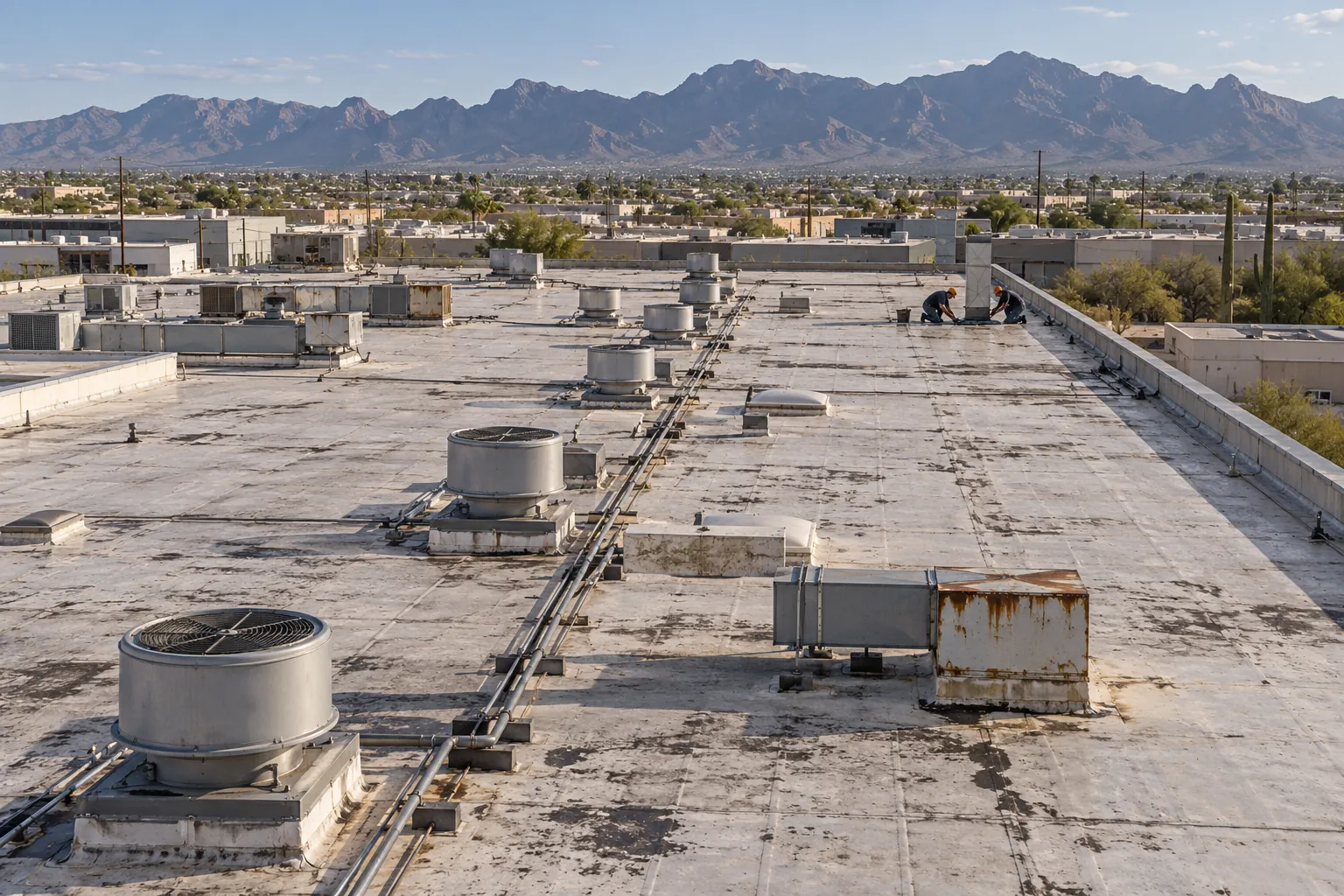
Big roofs rarely fail everywhere at once. Sectioned repairs work when the damage stays in zones.
Equipment, foot traffic, and exhaust load plant roofs in ways office roofs never see. These six come up most.
Stacks and fans that discharge heat, oil, or process residue soften and stain the membrane downwind. The damaged area gets cleaned, cut out, and patched with a membrane rated for that exposure.
Service routes between rooftop units wear through the surface where no walk pad was installed. Punctures from dropped tools and parts follow the same paths, so the worst wear lines up between the hatch and the busiest units.
Pipe stands and sleepers resting on the membrane rub through it as pipes expand and contract. New supports with pads under them end the wear, and the membrane under each old stand is patched before the pipe is set back down.
Large curbs under air handlers and makeup air units carry heavy vibration. Flashing cracks at the corners, and water runs down inside the curb. Unit service panels left open in the wind add more strain at the curb edge.
Big roofs move a lot of water to a few drains. A clogged drain or a sag in the deck holds water across a wide area until it finds a seam. Drains on distribution roofs sit far apart, so one blockage affects many bays.
Many plants mix metal-panel bays with flat additions. The transition flashing between them is a frequent leak point after monsoon storms.
Plant repairs are scoped by section so each one fits a shutdown window or a shift change.
| Repair | When It Fits | What It Involves |
|---|---|---|
| Section repair | Damage in one or two bays | Moisture survey, cut out wet areas, and patch the bays while the rest of the plant runs |
| Equipment-area repair | Leaks around fans, stacks, and curbs | Coordinate shutdowns, rebuild curb flashing, and patch residue-damaged membrane |
| Walk pad and support work | Wear along service routes and under pipes | Install walk pads on routes and new padded pipe supports |
| Transition repair | Leaks where metal bays meet flat sections | Rebuild the transition flashing and reseal the panel ends |
Repairs on a working plant protect product, equipment, and schedules below the roof.
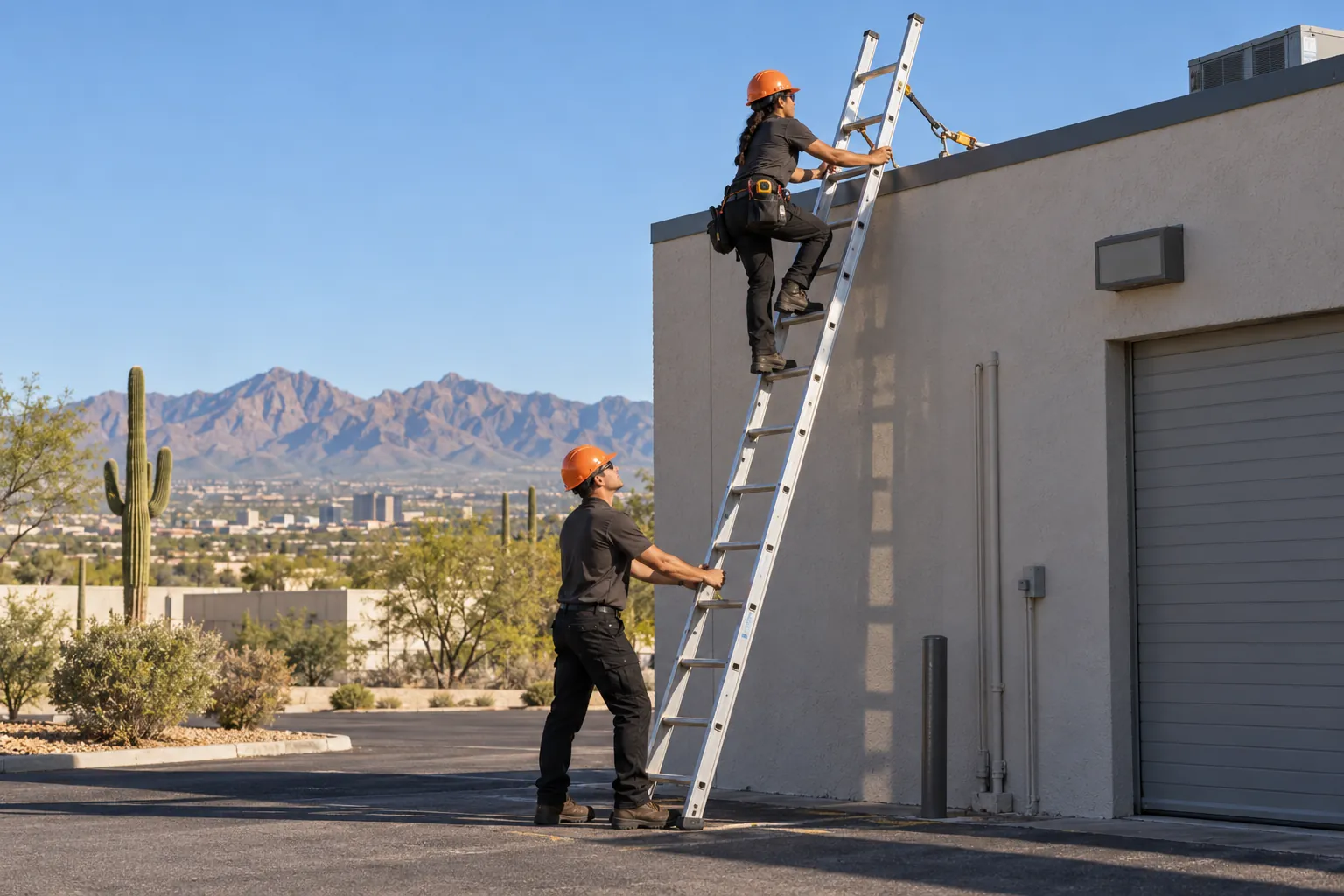
Call with the bay or line number and what is running below it. Repairs over running equipment get planned around a shutdown or shift change.
Plant work adds coordination steps to the repair itself.
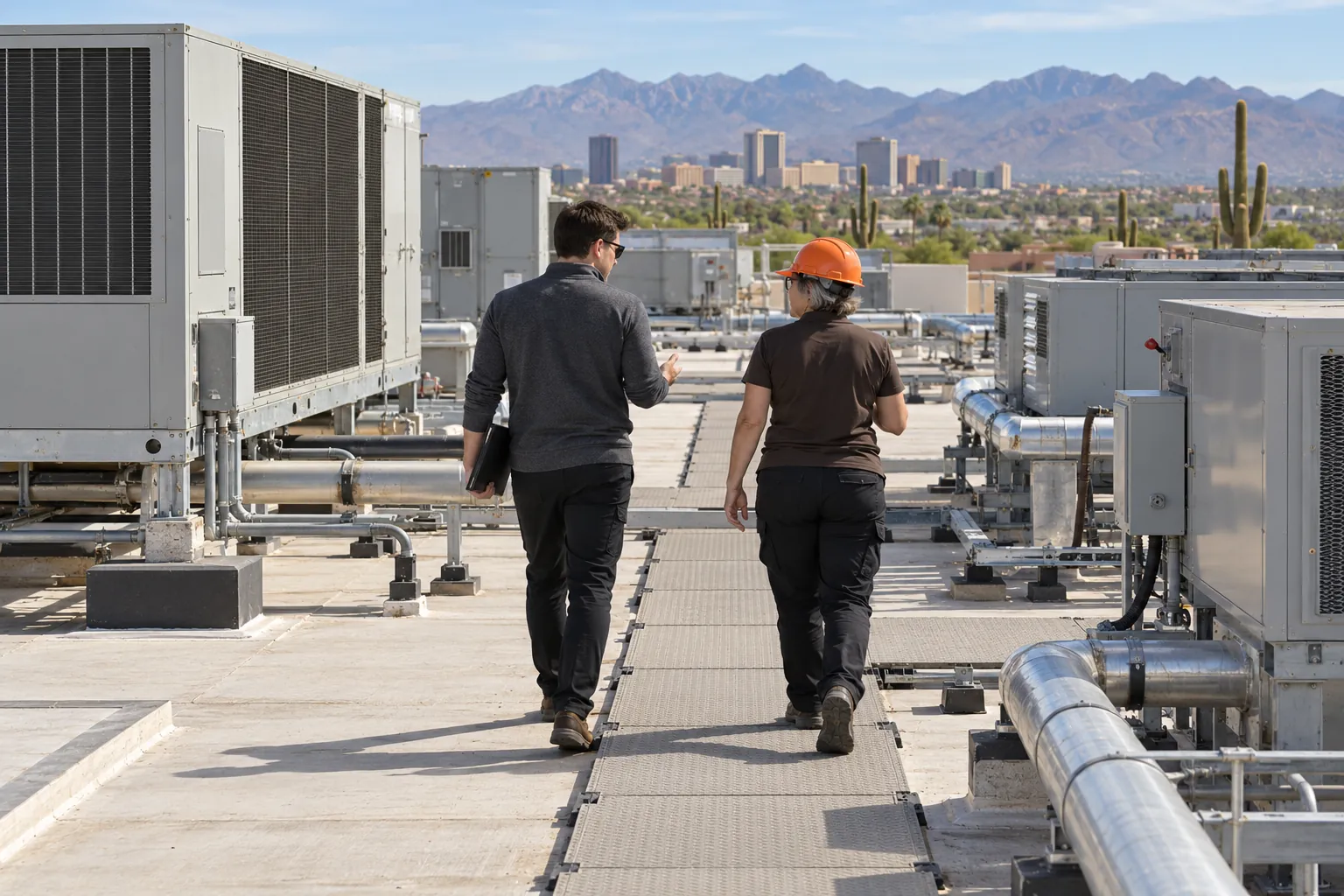
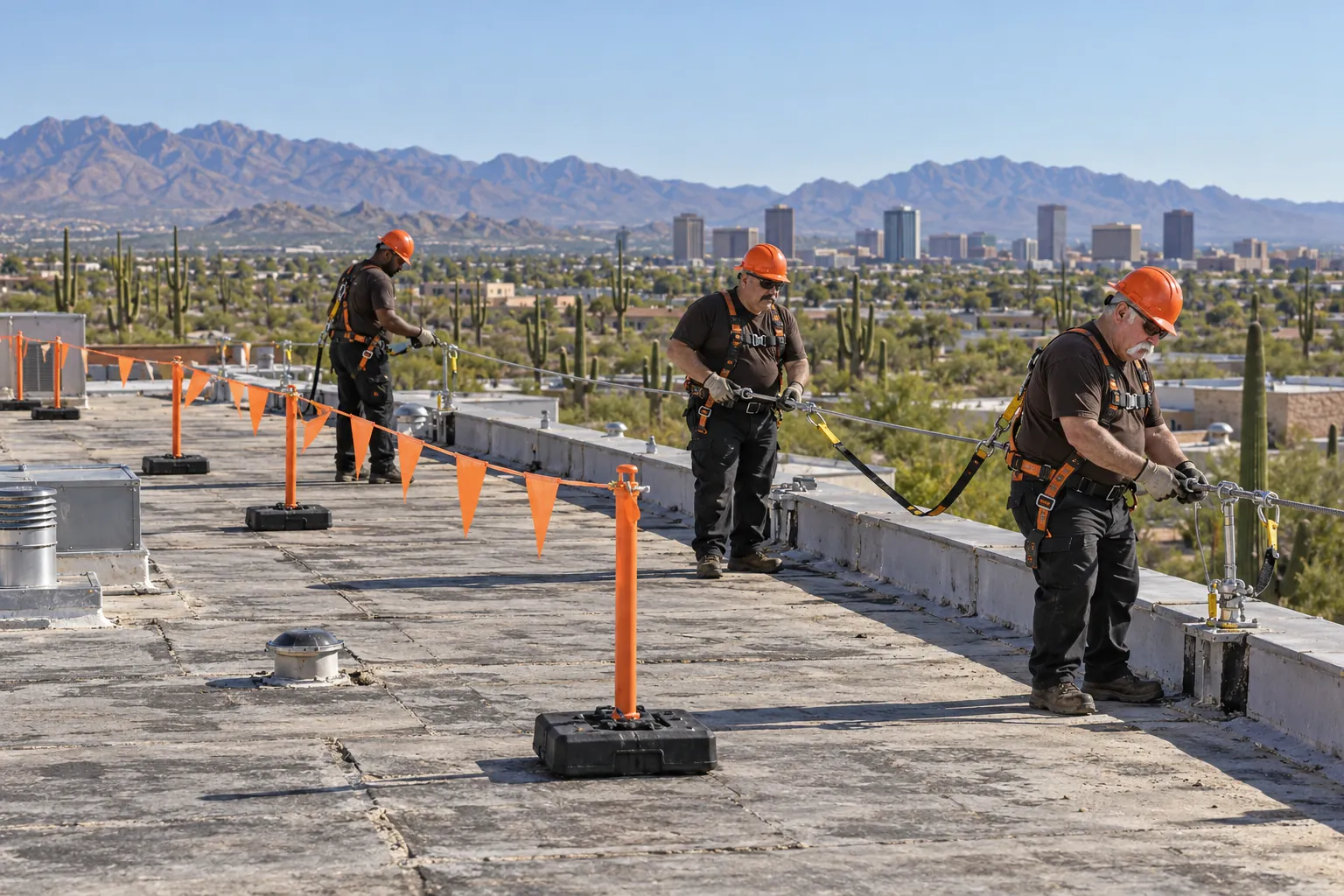
A roofer walks each bay with your facility contact, maps damage near fans, stacks, and pipe supports, and runs moisture readings where leaks have been reported.
Roof sections are matched to shifts, shutdown windows, and shipping times, and hot-work permits and fall protection are set up with plant safety.
Crews finish one roof section at a time, so the bays below keep producing and only the area overhead is affected.
Each finished section is checked, photographed, and logged on the roof plan so the next section starts without loose ends.
Industrial buildings often call on these services too.
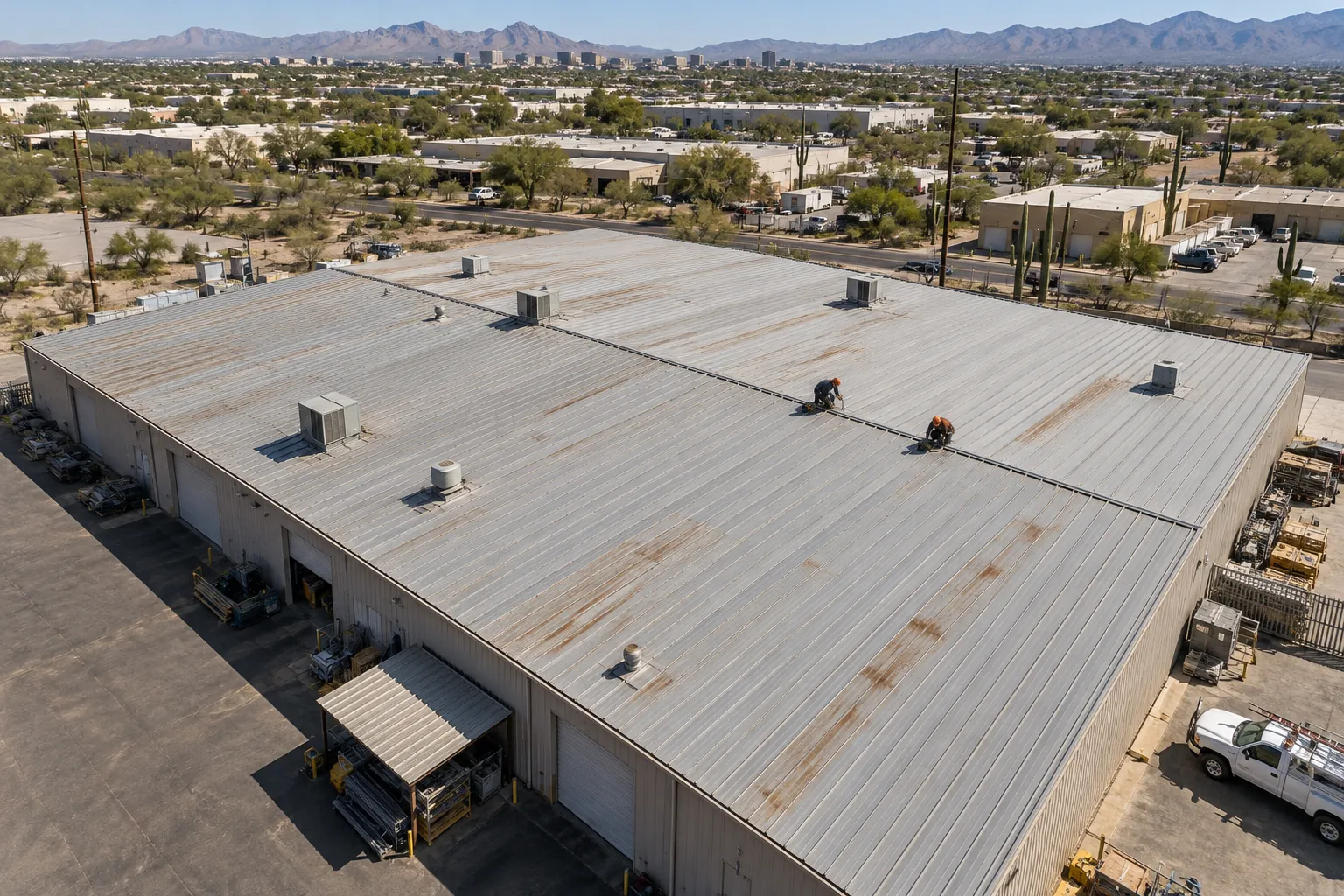
Panel bays on plants and warehouses get fastener, lap, and skylight repairs matched to the existing profile.
Commercial metal roof repair in Tucson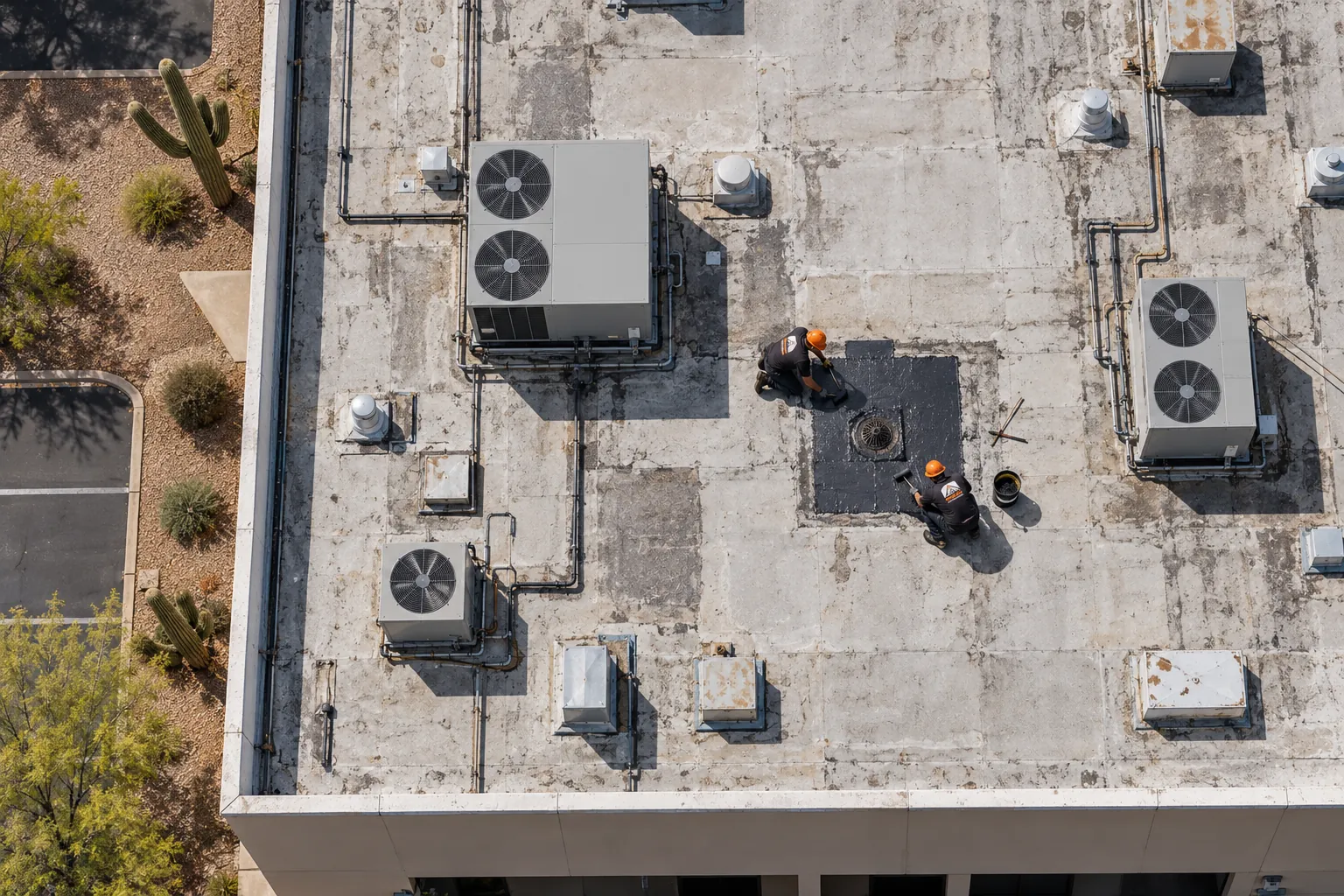
Flat additions and office wings on industrial sites get seam, drain, and curb repairs with matching membrane.
Flat roof repair in TucsonBy planning the work around the plant's schedule and safety rules. Hot work, fan shutdowns, and stacks that throw heat or residue onto the membrane are coordinated with your facility team, and repairs move section by section so lines, docks, and shipping keep running below.
Yes. Heat-welding membrane seams and torch work follow your plant's hot-work permit process, with fire watch and extinguishers where the permit calls for them. Cold-applied repairs are an option where hot work is restricted.
Residue from process exhaust breaks down some membranes over time. The damaged area is cleaned and replaced, and a membrane rated for that exposure goes in the zone downwind of the stack. Grease traps and stack caps get checked so the residue load drops after the repair.
Walk pads go on during repairs along the routes technicians use most, from the hatch to each unit. They spread foot traffic and keep dropped tools from puncturing the membrane.
Any size. Large distribution roofs get divided into sections by drain area or column line, so each section is finished, tested, and closed before the next one starts. Material staging moves with the work, keeping lifts away from active dock doors.
Off-hour roof work gets planned when production or safety rules require it. Ask when you call, and the schedule is set with your facility contact during the inspection.
Call with the building address and what is running below the leak, or request a free estimate for the roof.
Leave a name and number and we will call to talk through the leak or repair.
Or call now: (623) 310-0116