Debris-Packed Drains
Leaves, gravel, and seed pods wash or blow onto roofs below the slopes. Drains and scuppers clog fastest here, and a clogged drain sends water to the nearest seam.

Commercial roof repair in Catalina Foothills for office, medical, and retail roofs below the slopes, where runoff, debris, and tight access shape the repair.
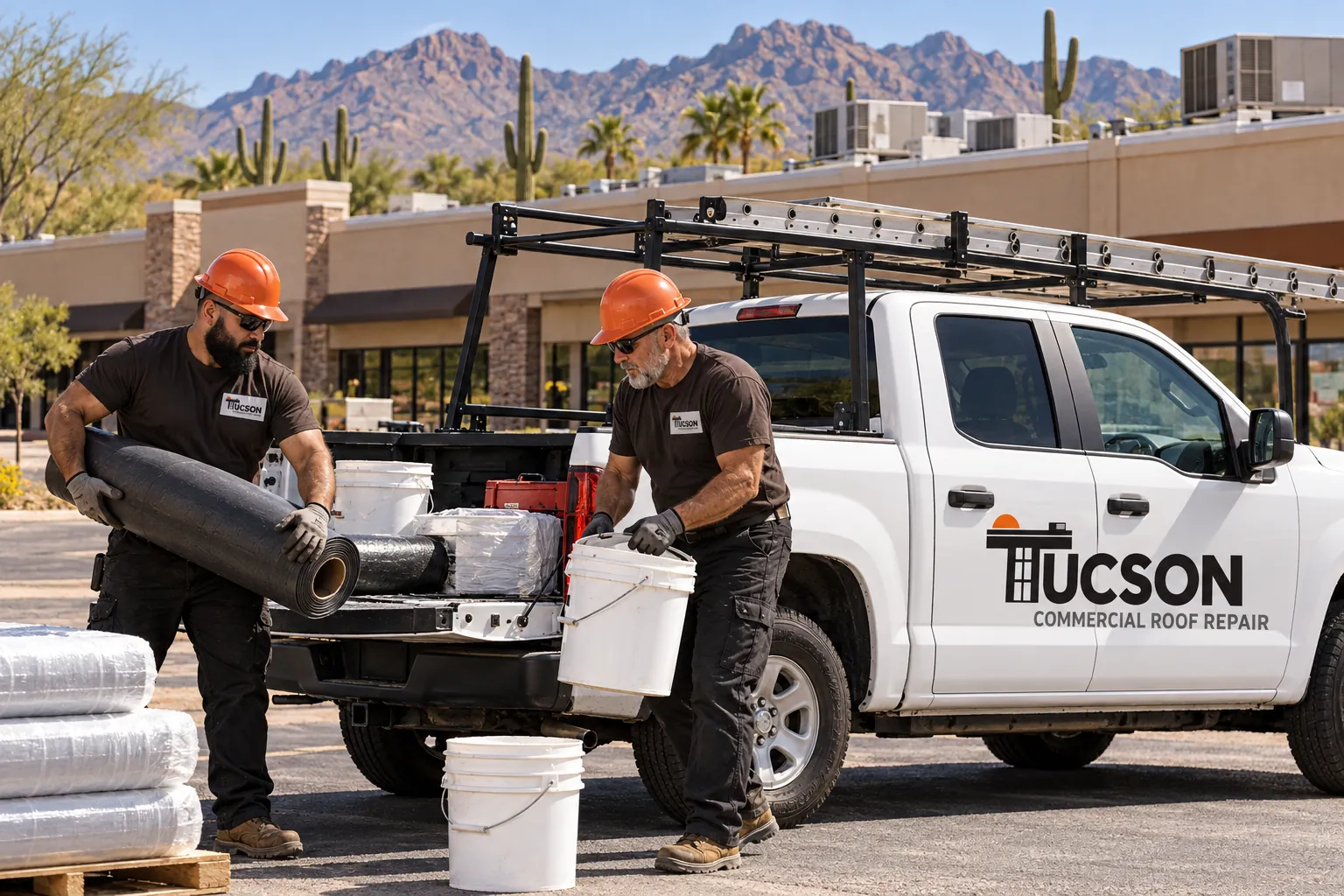
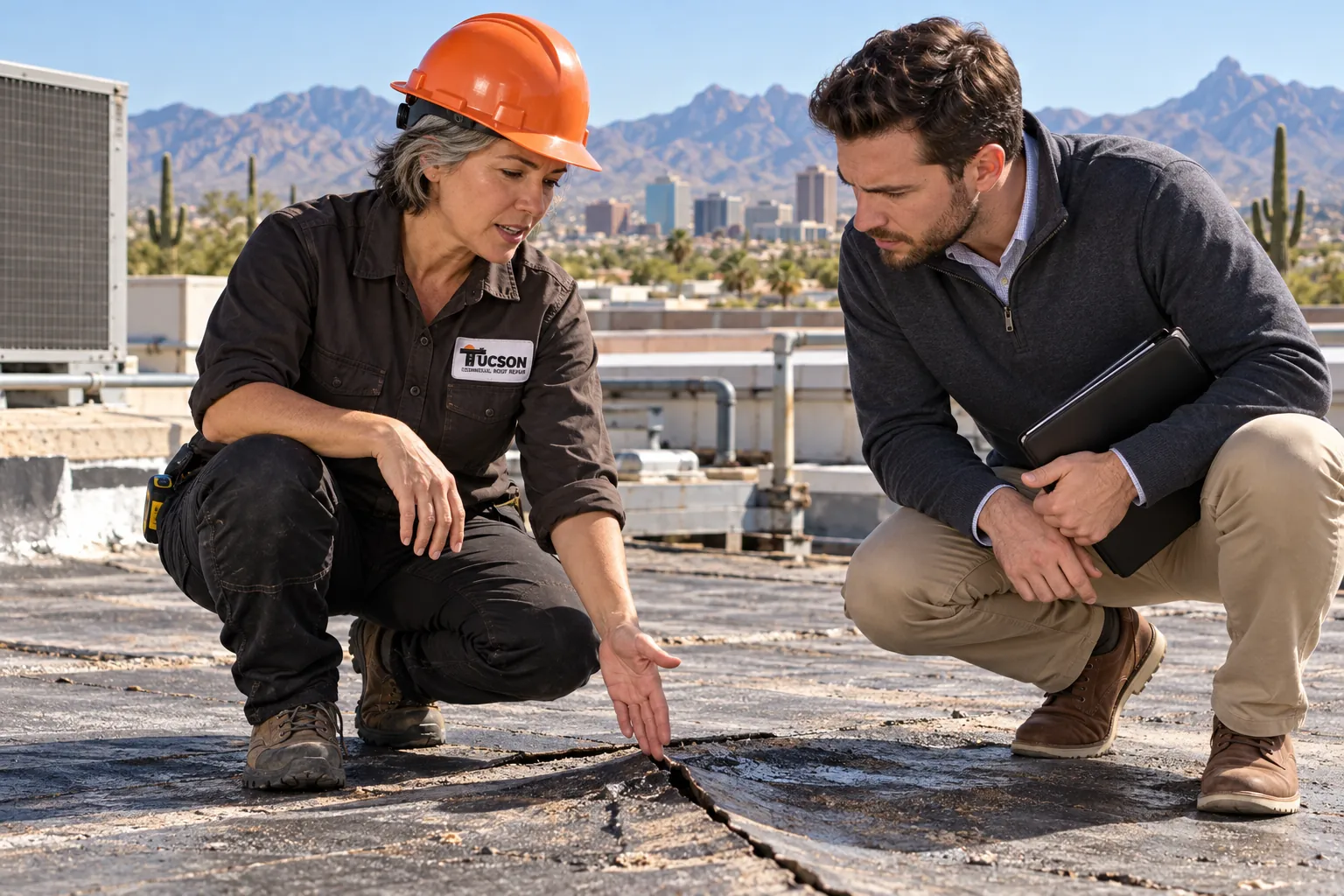
Commercial buildings in the Foothills sit on sloped lots below higher ground. Storm runoff carries gravel, leaves, and seed pods down the hill, and much of it ends up in roof drains and scuppers.
Access shapes the job here. Narrow drives, retaining walls, and grade changes decide where a lift can stand, so we plan staging during the inspection.
Hillside lots add runoff and debris to the usual sun damage. These six problems come up most.
Leaves, gravel, and seed pods wash or blow onto roofs below the slopes. Drains and scuppers clog fastest here, and a clogged drain sends water to the nearest seam.
Where a roof meets a taller wall or a slope, water runs down the wall and onto the roof edge. Failed wall flashing at that joint leaks straight into the room below.
Debris dams at a scupper hold shallow water across part of the roof. The ponding ring marks how far it reached and where the membrane takes the most wear.
South-facing roofs here take full sun most of the year. Lap edges dry, curl, and open, and the first heavy storm finds them.
Office buildings with skylights or clerestory windows carry more wall-to-roof joints. Sealant at those joints cracks and lets wind-driven rain in.
Mixed roofs with pitched tile or metal sections drain into gutters that fill with hillside debris and overflow back under the roof edge.
Clearing and fixing the drainage path protects the building and the people working in it.
These services cover most Foothills office, medical, and retail roofs.
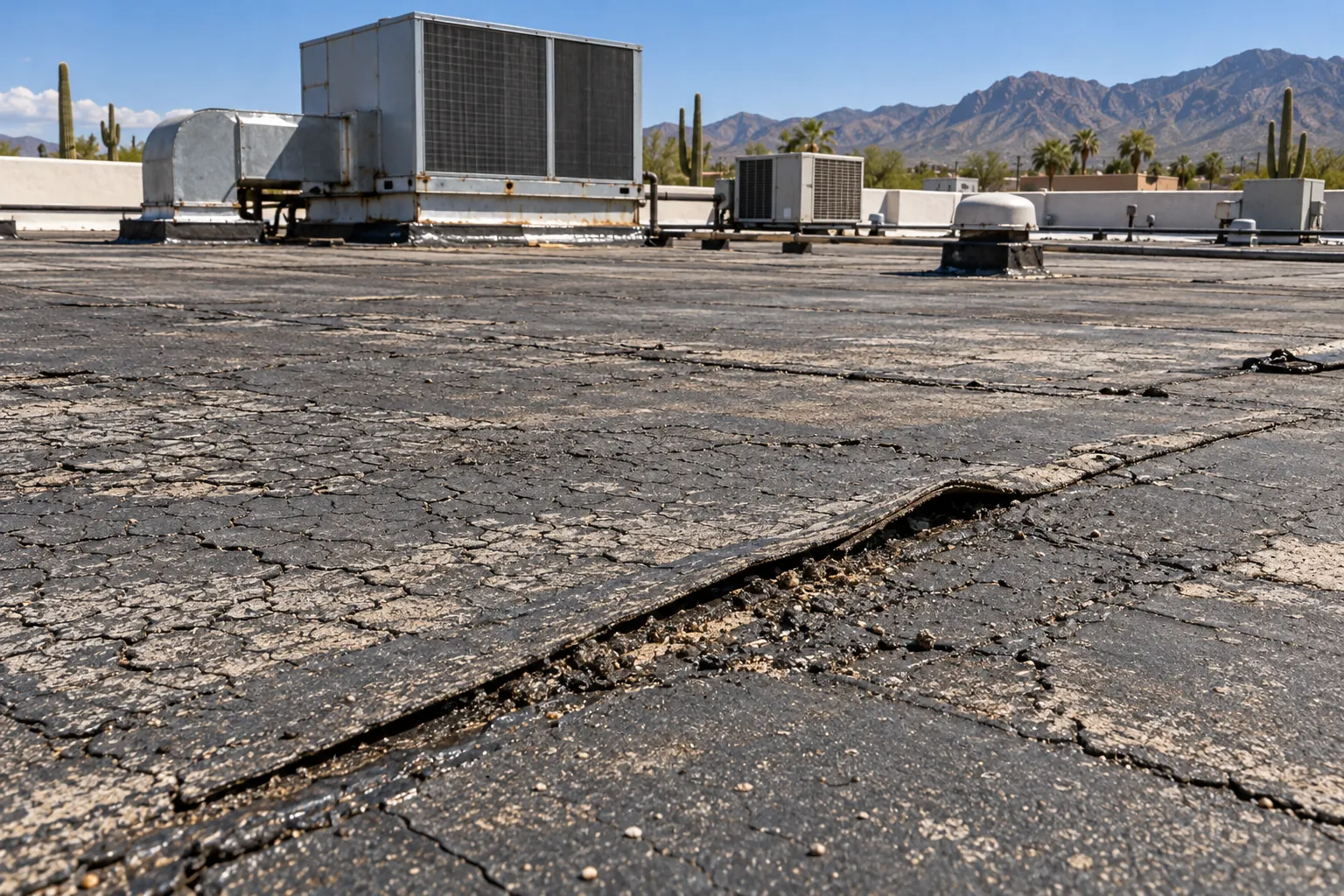
Built-up and single-ply roofs get drain, seam, and wall flashing repairs, with debris cleared from every drain on the visit.
Flat roof repair for Catalina Foothills
Water tests along the uphill wall and at each scupper confirm whether the leak comes from runoff, flashing, or a seam.
Commercial roof leak repair for Catalina Foothills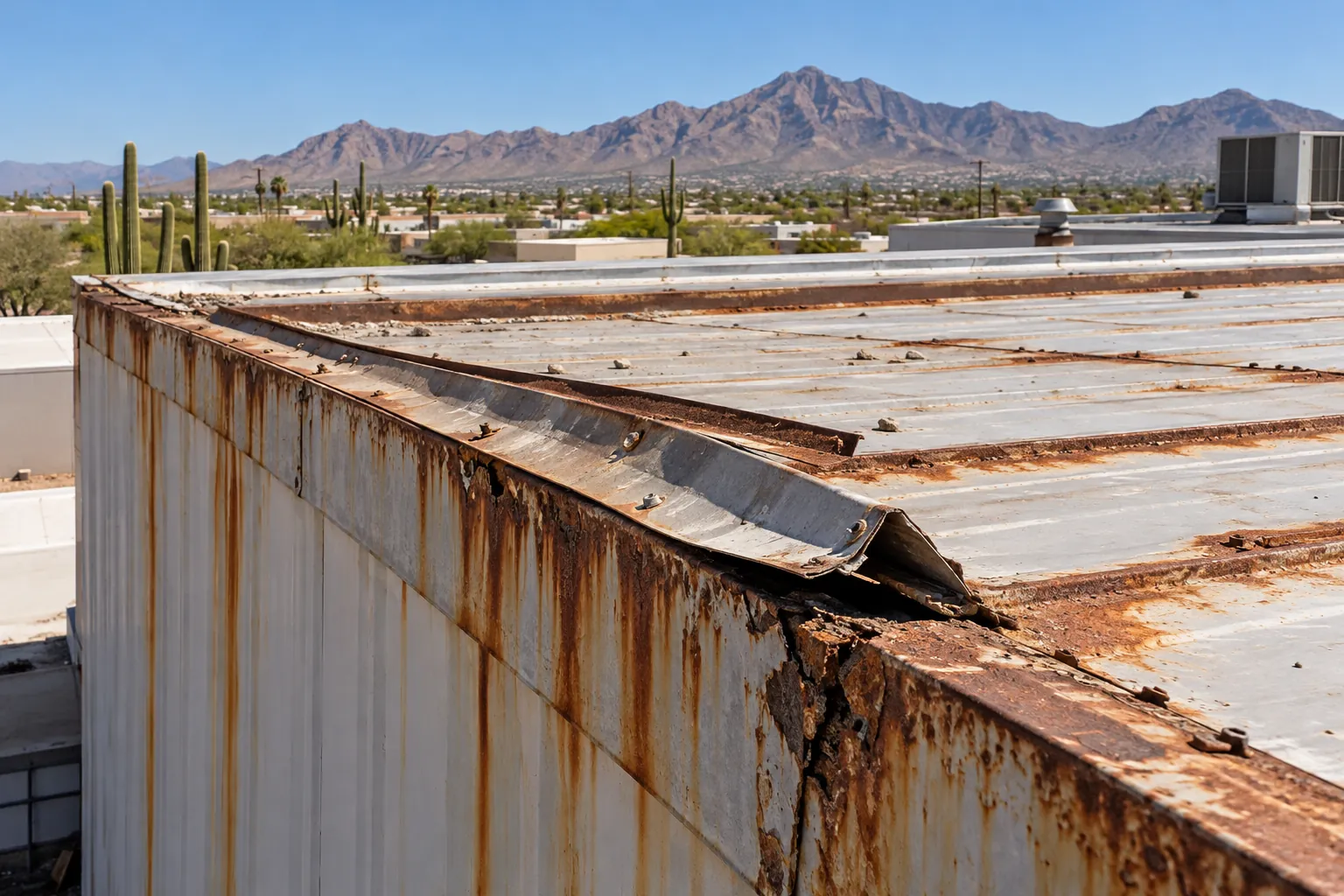
Metal canopies and pitched sections get fastener, lap, and gutter repairs where they tie into the flat roof.
Commercial metal roof repair for Catalina Foothills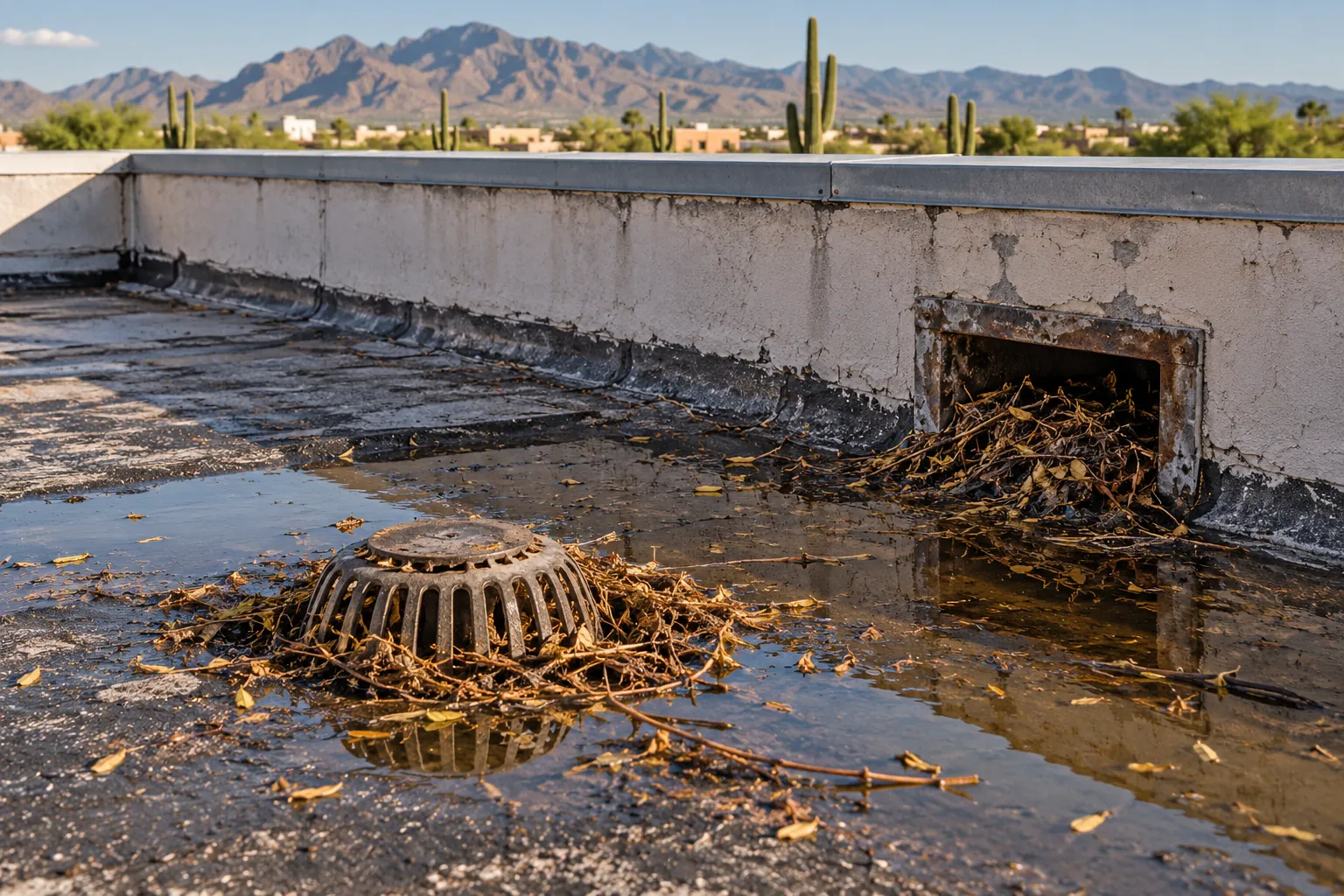
Call with the address and which side of the building takes the runoff. Clearing and checking drains is the first step on Foothills roofs.
Hillside lots add an access plan to the usual four steps.
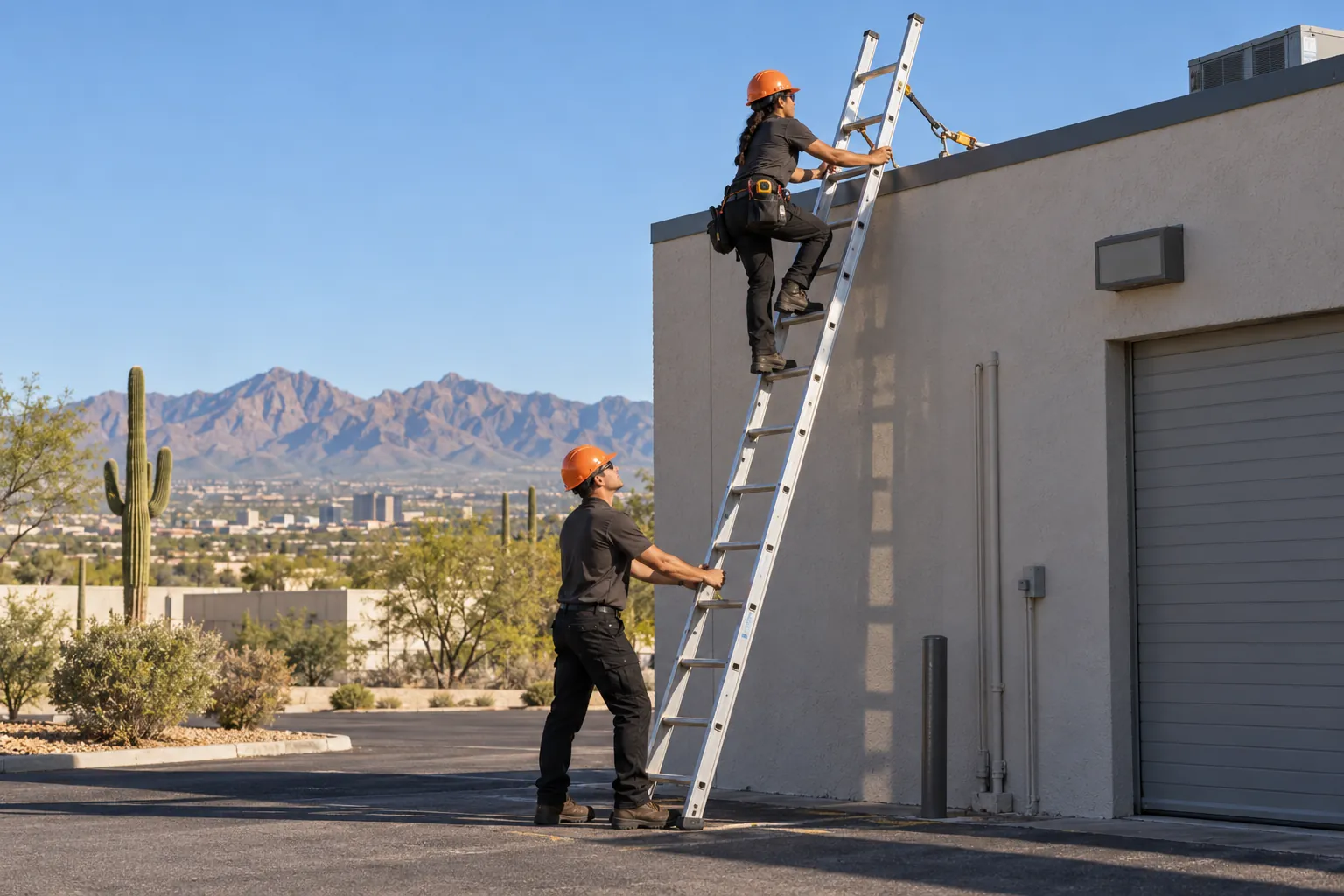

We walk the roof and the lot, follow the path runoff takes onto the roof, and check every drain, scupper, and uphill wall joint.
Lift and ladder spots to the roof are chosen around grades, walls, and landscaping, and material staging is kept off entrances and parking.
Drains and scuppers are cleared first, then seams, wall flashing, and gutter ties are repaired with matching material.
A water test on the drains and the uphill wall joint confirms the repair, and photos record where debris collected for the next maintenance visit.
Neighboring communities we also cover, each with its own roof types.
West along Ina Road, with retail centers crowded with rooftop units and curbs.
Northwest up Oracle Road, where office and medical suites share one roof.
Southwest toward I-10, with older built-up roofs and worn drains.
North on SR 77 past Oro Valley, with small one-story commercial roofs.
Pima County Development Services, since Catalina Foothills is unincorporated. Check thresholds with the county before repair work reaches the deck, drains, or rooftop equipment supports.
Two inspections a year, before and after monsoon season, plus drain clearing between them. Foothills roofs collect more debris than most, so clear drains, scuppers, gutters, and canales after big storms, reseal curbs and laps when the sealant cracks, walk the edge for loose coping, and keep technicians on walk pads.
Runoff itself rarely harms the membrane, but the debris it carries does. Gravel and leaves clog drains, water ponds behind them, and the standing water wears the membrane and finds open seams.
By planning lift and ladder spots to reach the roof during the inspection. Narrow drives and retaining walls sometimes mean carrying material by hand or using a smaller lift, which is noted in the estimate.
We repair where pitched sections tie into the flat roof: crickets, valleys, gutters, and wall flashing. Leaks at those transitions are common on mixed roofs in the Foothills.
Within a few days of a heavy storm, once the roof is safe to walk. Debris that settles in a drain hardens as it dries, and the next storm finds the drain already blocked.
Buildings set into a slope often have a taller wall or a retaining wall on the uphill side. Rain hitting that wall runs down onto the roof edge, and any gap in the wall flashing lets it in.
Yes. Lift spots and material paths are chosen to stay off planted areas and away from wall caps, and drop cloths go down wherever roof debris could fall.
Request a free estimate or call with the address and where the runoff hits the building. We will inspect the roof and the drainage path.
Leave a name and number and we will call to talk through the leak or repair.
Or call now: (623) 310-0116