Patch Over Patch
Mastic, roll roofing, and fabric patches stacked over the years each move differently in the heat. Their edges split apart, and water runs between the layers.

Commercial roof repair in Flowing Wells for older built-up roofs, where blisters, alligatoring, stacked patches, and worn drains decide what a repair can fix.
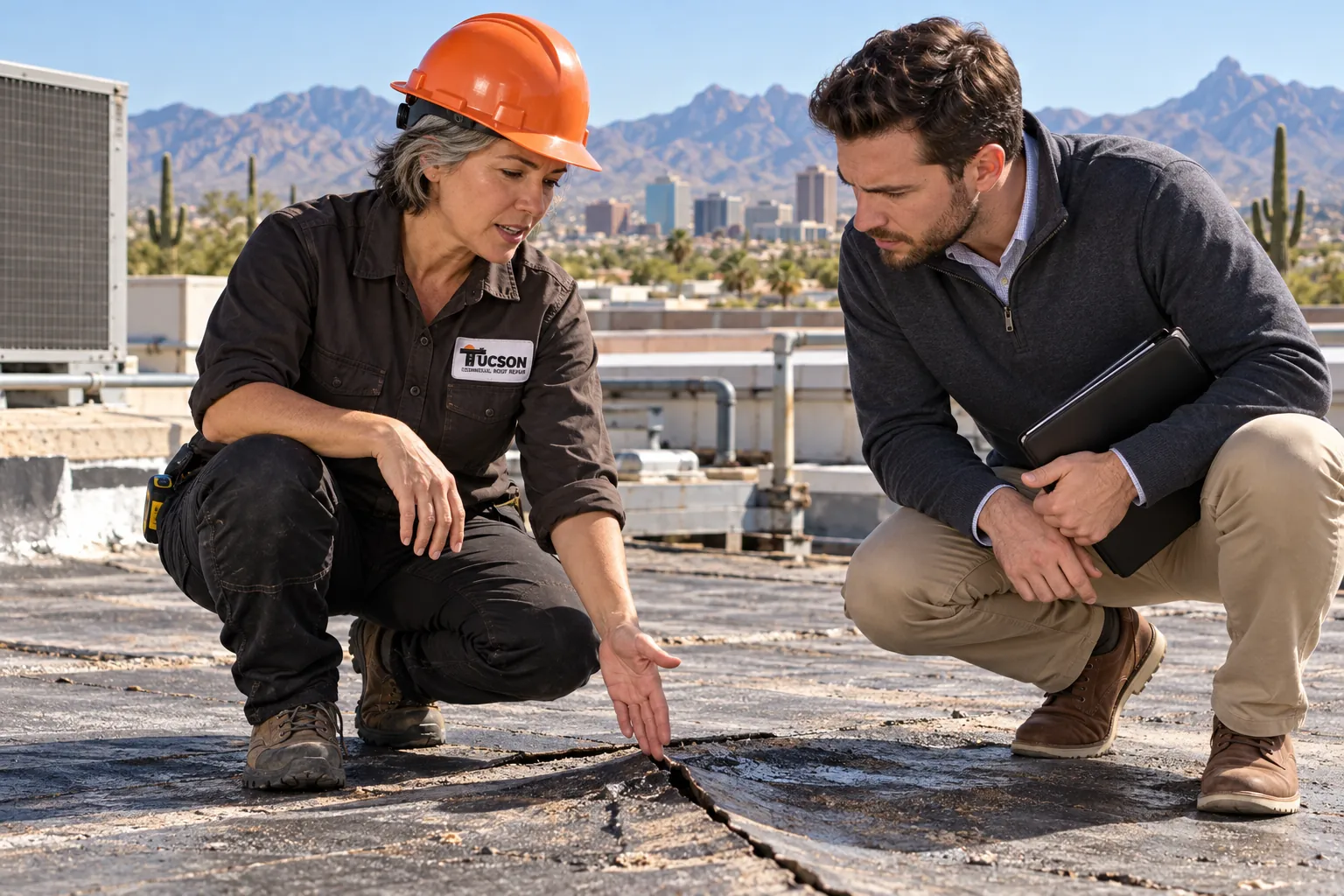
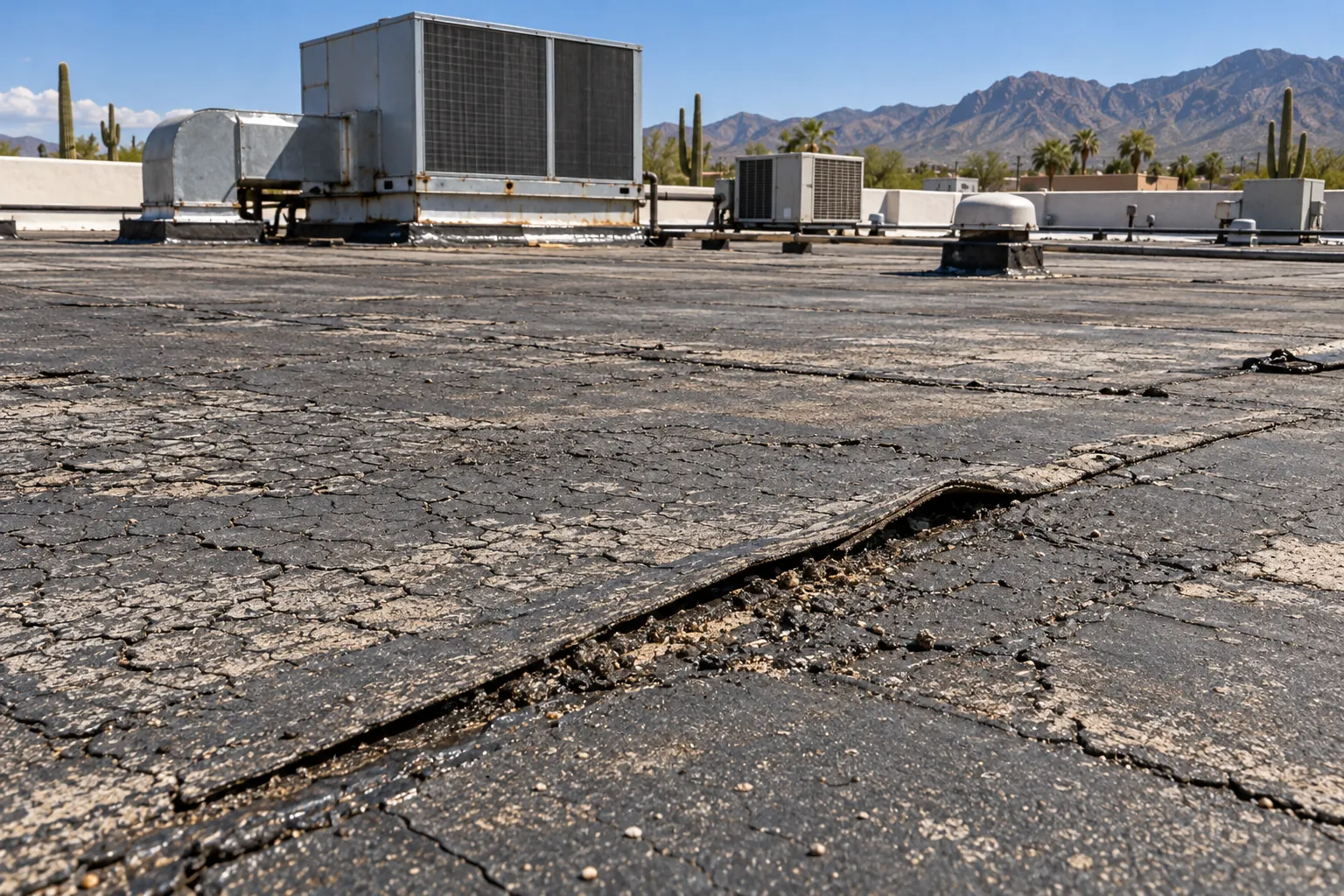
Many commercial buildings in Flowing Wells carry built-up roofs that have been patched for decades. Each patch was a different material, and the edges where they meet are where the next leak starts.
We sort a roof like this into what still holds, what needs repair now, and what needs a replacement plan, so the money goes where it lasts.
Aging built-up roofs show their age in a few predictable places. These six come first.
Mastic, roll roofing, and fabric patches stacked over the years each move differently in the heat. Their edges split apart, and water runs between the layers.
Blisters that crack open let water between the plies. Cutting them out, drying the area, and patching in layers stops the spread.
Asphalt that has dried and cracked into small plates sheds water poorly. Small areas get resurfaced; large areas point toward a replacement plan.
Old cast drain bowls lose their clamping rings and strainers. Water gets under the roof at the drain itself, and the leak shows near the middle of the room.
Older base flashing at parapets shrinks and pulls away from the wall. The gap at the top lets water run behind the flashing.
Pitch pans around pipes and supports lose their filler as it shrinks and cracks. Refilling them, or swapping in modern boots, closes the opening in the membrane.
Repairing the right spots on an aging roof stretches its life and sets up the replacement on your schedule.
These three services cover most Flowing Wells commercial roofs.
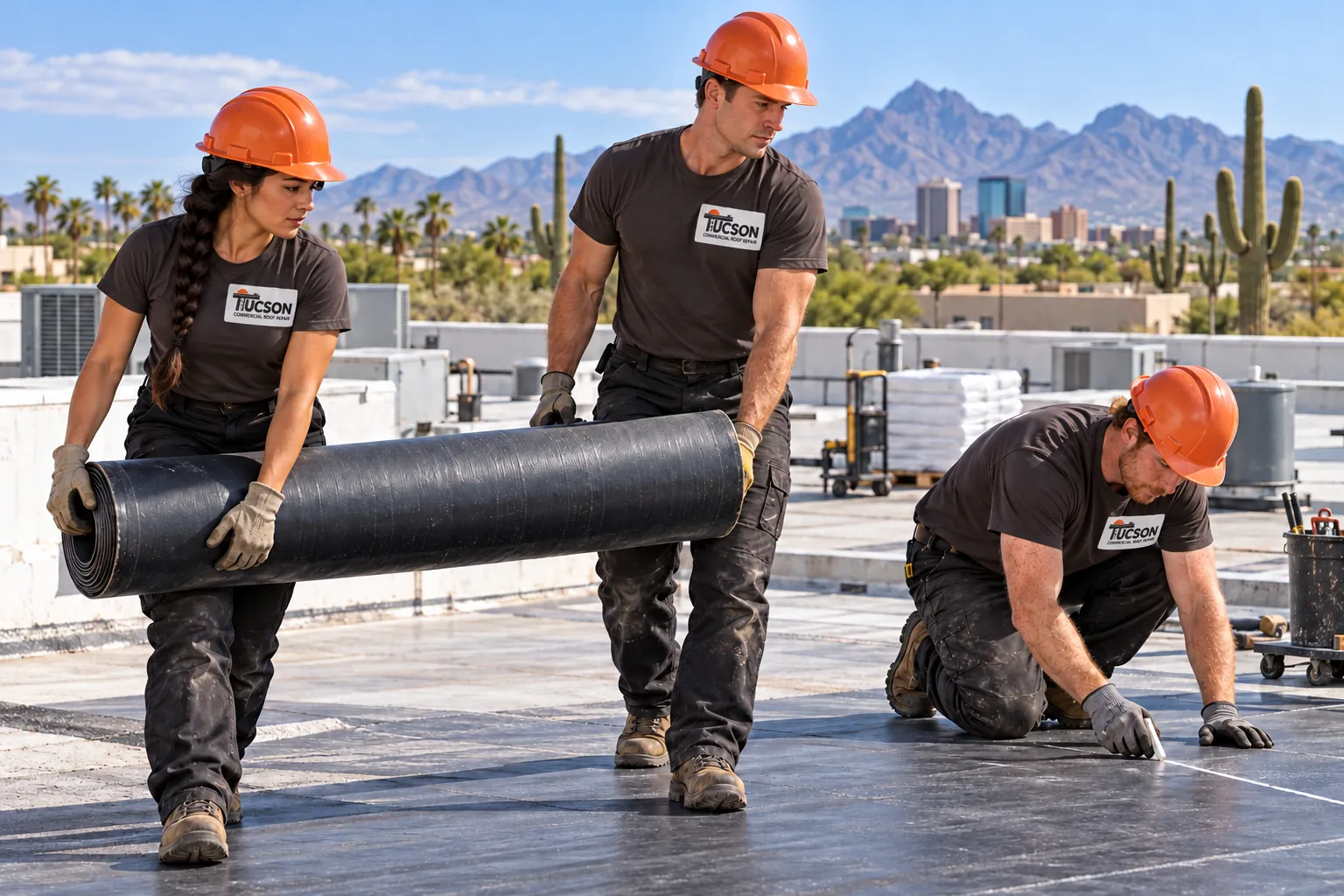
Built-up and modified roofs get blister, patch, flashing, and drain repairs with compatible asphalt materials.
Flat roof repair for Flowing Wells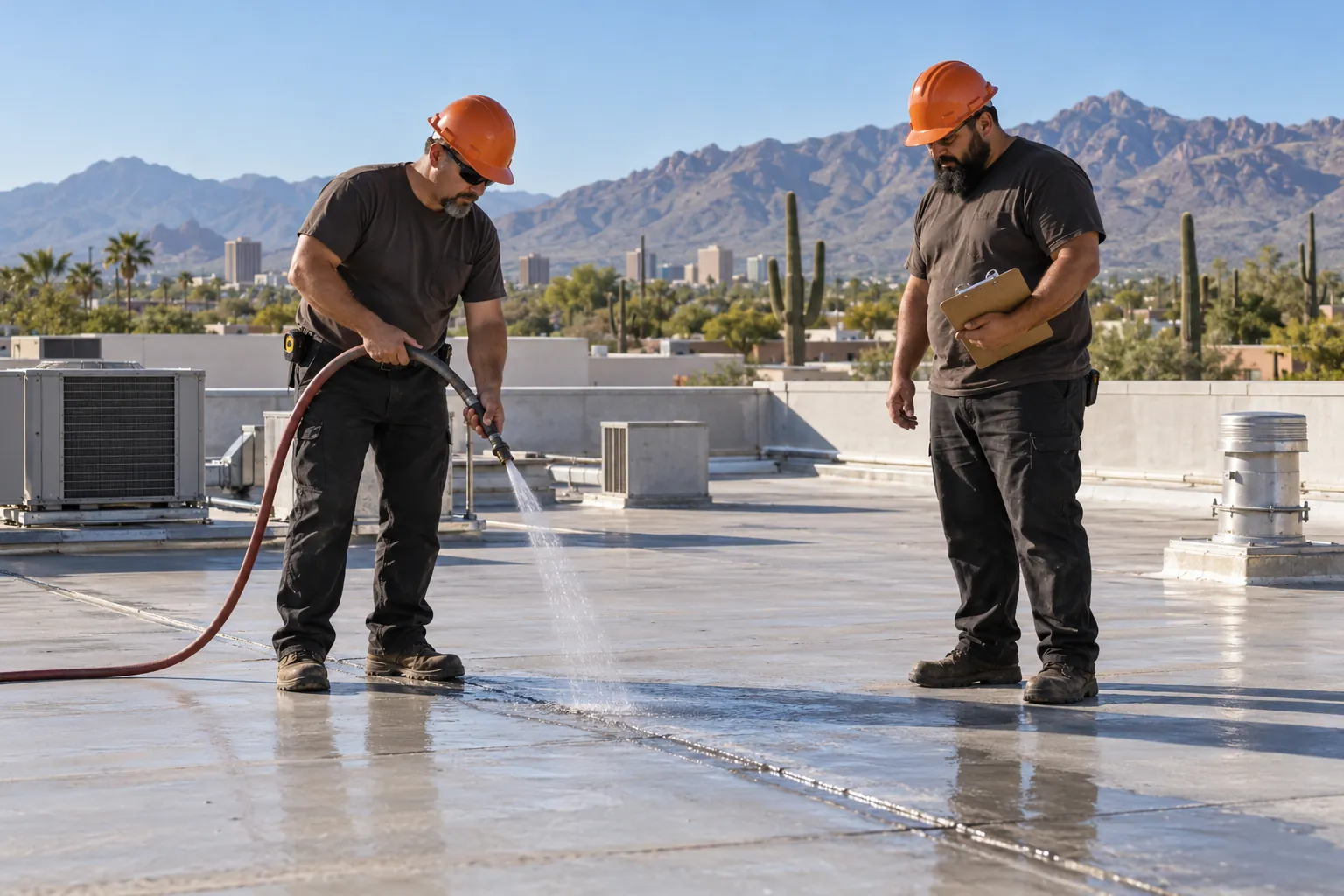
Leaks hiding under layers of old patches get traced with water tests and moisture readings before anything is cut.
Commercial roof leak repair for Flowing Wells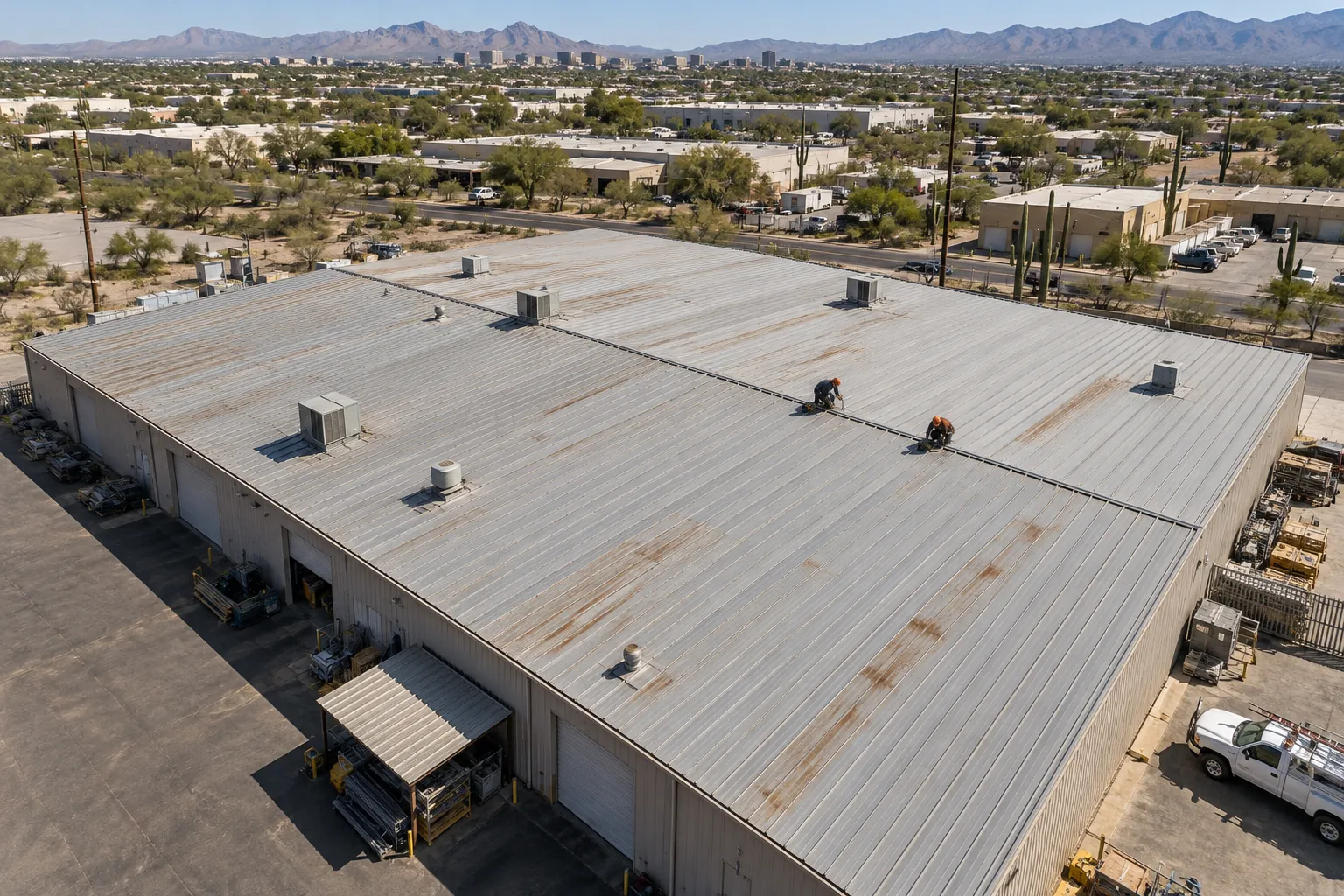
Metal shops and canopies get fastener, lap, and rust repairs alongside work on the flat roof next door.
Commercial metal roof repair for Flowing Wells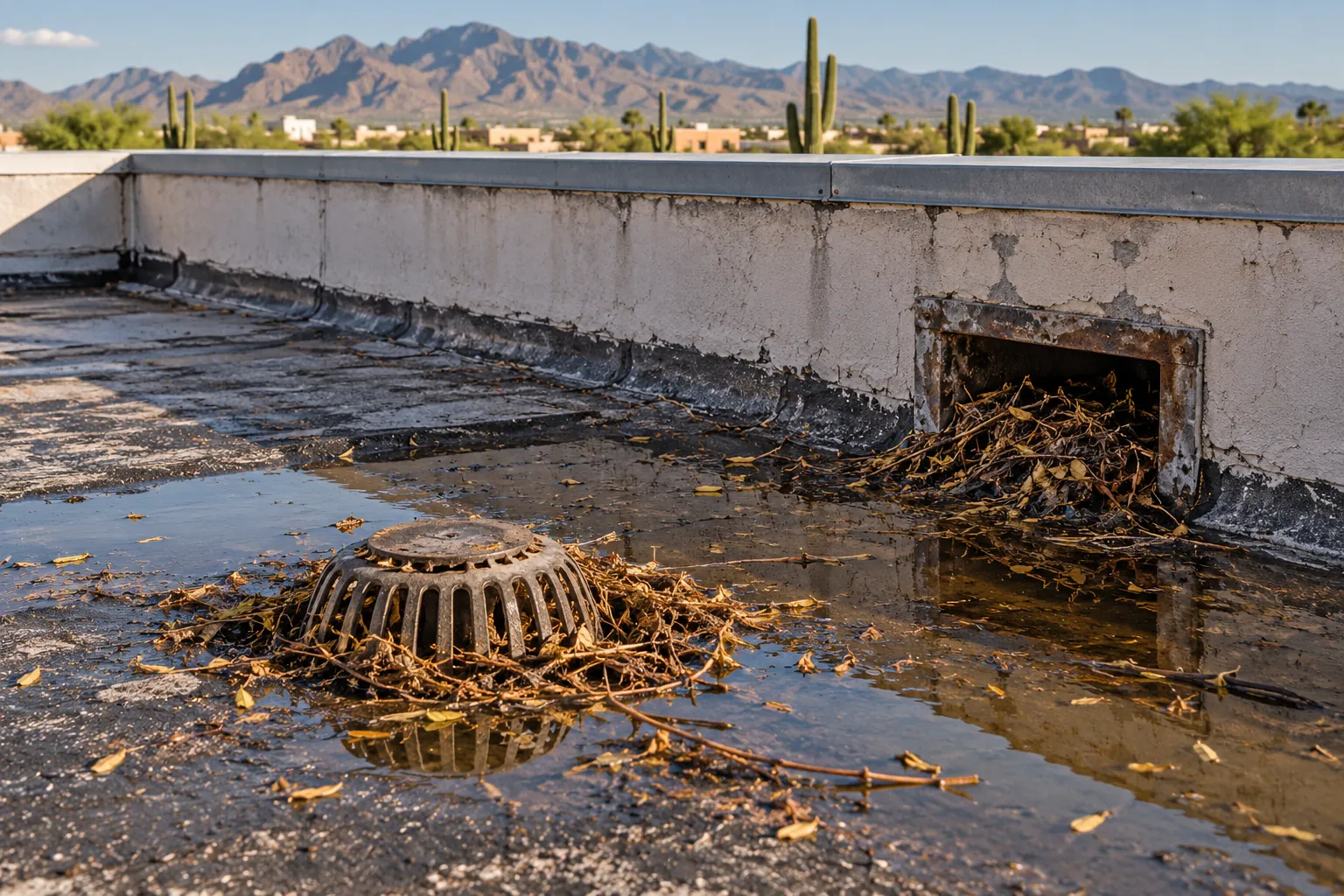
A drain that leaks after every storm usually needs its clamping ring or bowl rebuilt. Send the address and we will look at it.
Older roofs get an extra sorting step before any repair.


We walk the whole roof, note every old patch and blister, check each drain bowl and strainer, and take core cuts where readings show water.
Each area gets a call: holding, repair now, or plan for replacement. You get the sorted list with photos and a roof sketch.
Built-up repairs go back in layers with compatible asphalt materials, and drains get new rings, strainers, or bowls as needed.
Repaired areas and remaining old patches are photographed and mapped, which makes the next inspection and any replacement easier to plan.
Neighboring communities we also cover, each with its own roof types.
North toward Oracle and Ina roads, with retail roofs crowded with rooftop units.
Northwest on I-10, with long distribution roofs and widely spaced drains.
South past downtown, where masonry storefronts carry parapets and canales.
Northeast below the mountains, with hillside runoff and debris at roof drains.
Pima County Development Services, since Flowing Wells is unincorporated. Ask the county about thresholds before repair work involves the deck, drains, or rooftop equipment supports.
Often, if the insulation is mostly dry and the deck is solid. Core cuts answer that. Blisters, drains, and flashing repair well on built-up roofs; widespread alligatoring and wet insulation point toward replacement.
Because the materials are mismatched. Mastic, roll roofing, and fabric each expand differently in the heat, so their edges split apart and water runs between the layers.
Adding a patch over a failed patch traps the problem. The old material comes off down to solid plies, the area dries, and the repair goes back in layers that bond.
Clearing the line, replacing the clamping ring and strainer, and reflashing the membrane into the bowl. Cracked cast bowls get replaced. A rebuilt drain usually ends the leak in the middle of the room.
Ask for a condition report with the repair. It shows which areas still hold and which are failing, so you can budget the replacement for a year that suits the building.
As long as the plies around them stay intact. Repairs on a roof with dry insulation and flexible plies hold for years, while repairs on a cracked, brittle surface buy time until replacement.
On gravel-surfaced built-up roofs, yes. Gravel protects the asphalt from sun, so it gets swept aside for the repair and spread back over the patched area.
Request a free estimate or call with the address and where the leaks keep showing up. We will sort what holds from what needs repair.
Leave a name and number and we will call to talk through the leak or repair.
Or call now: (623) 310-0116