Split And Lifted Seams
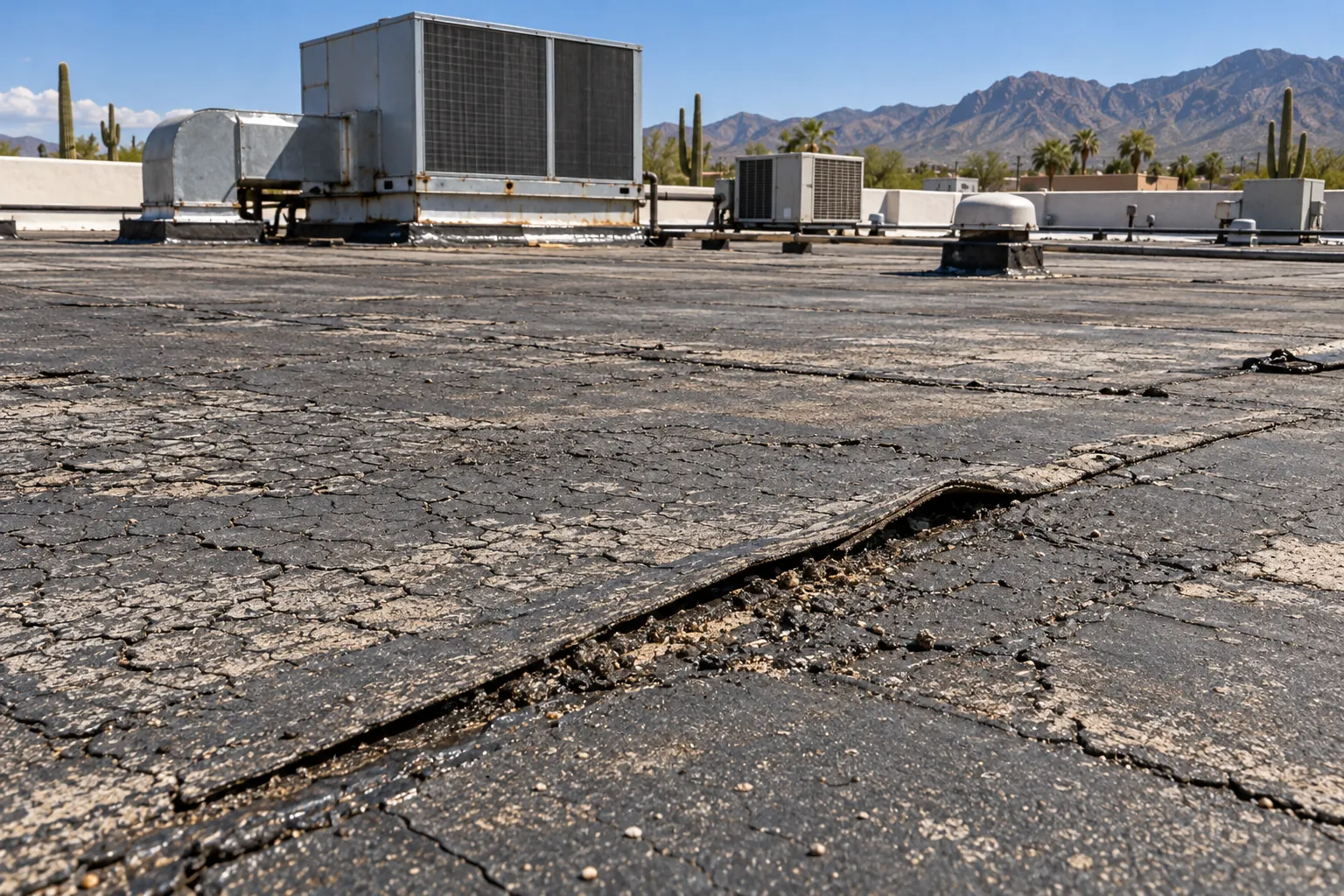
Sun dries the bitumen or adhesive at a lap until the edge curls. On TPO and PVC, a weak heat weld opens the same way. A probe along the seam finds the gap before water does.

Flat roof repair in Tucson for low-slope commercial roofs: seams, drains, curbs, and parapet flashing fixed with material that matches the roof on the building.
A flat roof repairs well when the damage sits at its details. Large wet areas change the answer.
Flat roof leaks start where the membrane meets something else. These six details account for most repairs.
Sun dries the bitumen or adhesive at a lap until the edge curls. On TPO and PVC, a weak heat weld opens the same way. A probe along the seam finds the gap before water does.
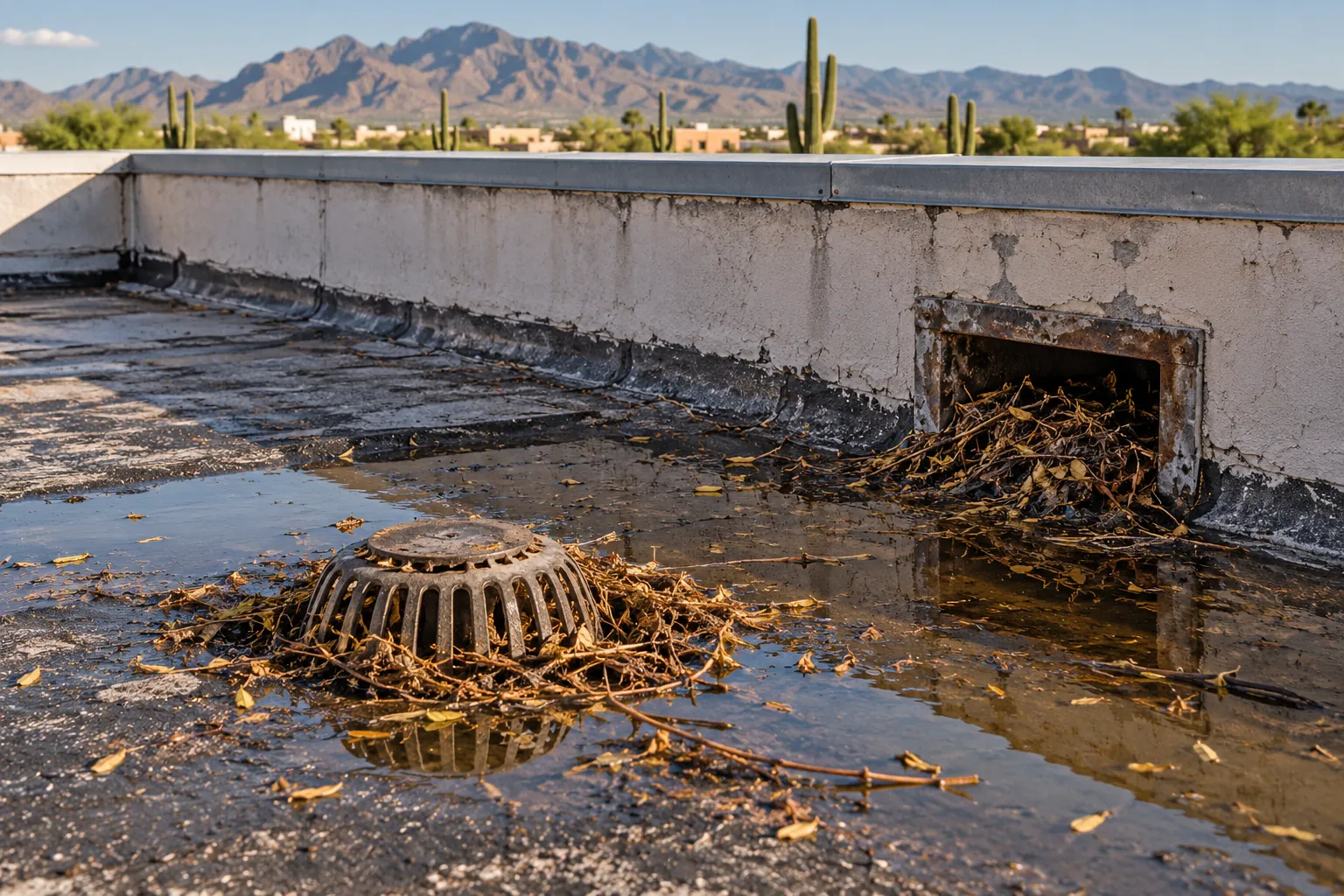
A drain bowl packed with dust and gravel holds water against the membrane for days. Clearing it, resetting the strainer, and reflashing the clamping ring ends the ring of standing water.
Base flashing under rooftop units cracks where the membrane turns up the curb. Vibration from the unit and foot traffic during service calls open it further each season.
Water enters through cracked stucco or a loose coping cap, runs inside the wall, and soaks the flashing from behind. That repair starts at the top of the wall.
Rubber boots split in the sun and pitch pans lose their filler as it shrinks. Each penetration gets a new boot or a refilled pan sealed to the membrane.
Blisters form where moisture or air is trapped between plies. Small ones are cut, dried, and patched; a surface cracked like alligator skin points to a wider problem.
The repair depends on the membrane and the size of the damage. These four cover most flat roofs here.
| Repair | When It Fits | What It Involves |
|---|---|---|
| Seam repair | Laps or welds open in a few places | Clean and probe the seam, then reseal it or weld a cover strip of matching membrane |
| Flashing repair | Leaks at curbs, walls, pipes, or drains | Remove failed flashing, dry the area, and install new base flashing and termination |
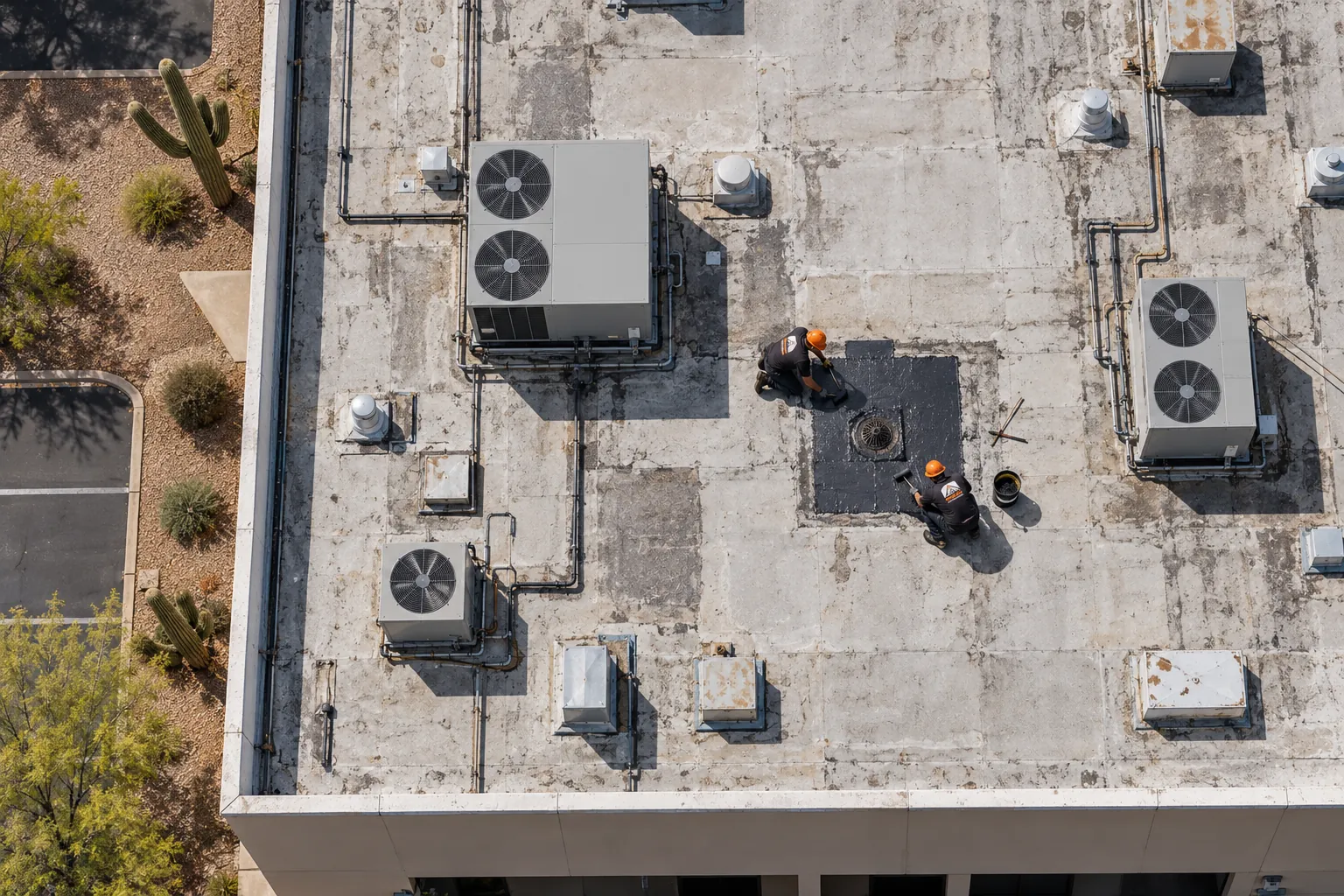
| Section patch | Blisters, punctures, or a small wet area | Cut out wet material, replace insulation as needed, and patch in layers |
| Drain rebuild | Ponding and leaks at a drain bowl | Clear the line, reset the clamping ring, and reflash the drain sump |
Fixing a seam or drain early keeps a small repair from turning into wet insulation across a section.
Ponding that lasts more than a couple of days points to a blocked or undersized drain. Send the address and we will check it.
Every flat roof repair follows these steps, from the first walk to the final photos.
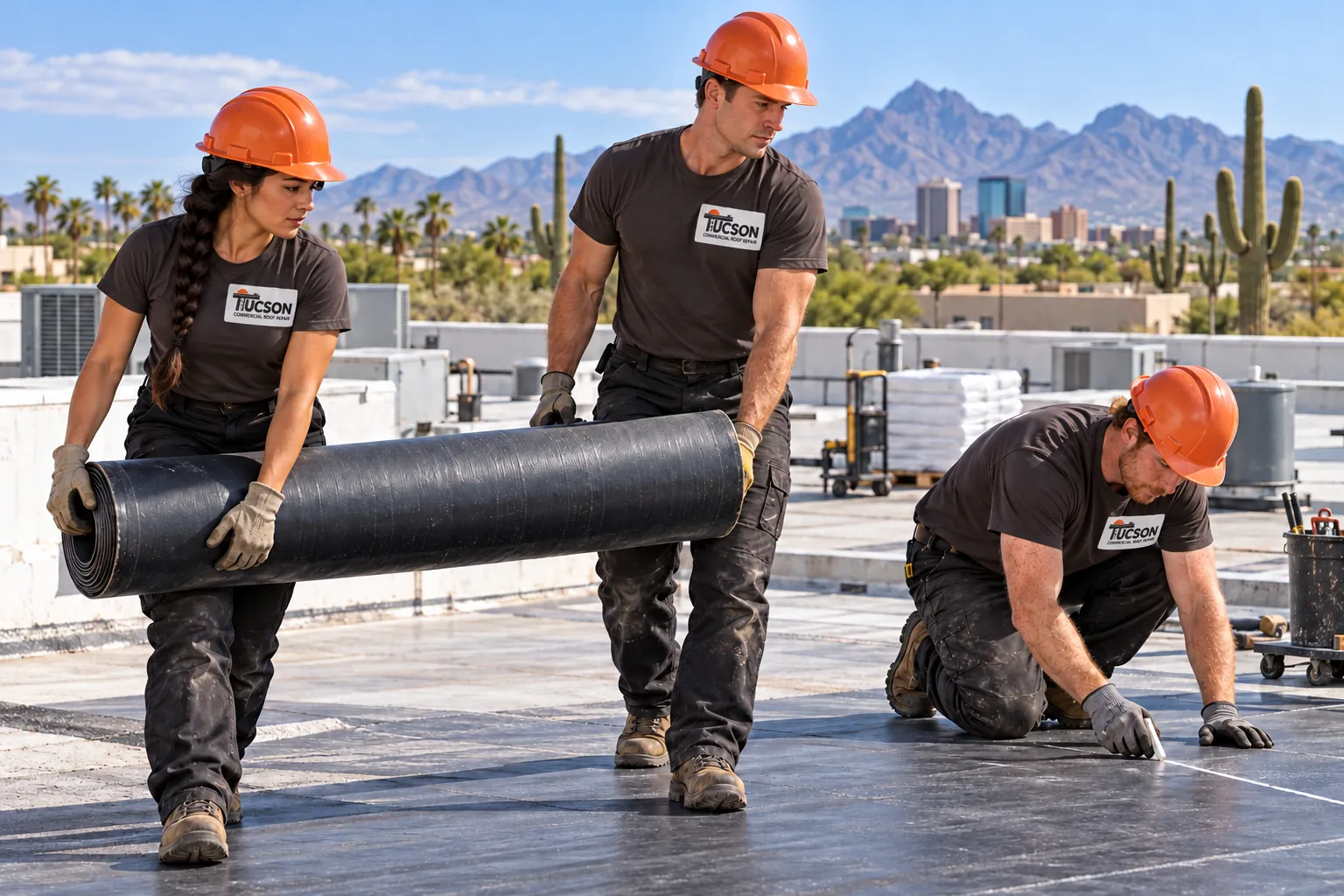
We walk every section, probe seams, check drains and curbs, and take moisture readings around each stain so the repair covers all of the wet material.
Wet insulation is cut out and replaced, and the surface around the repair is cleaned to bare membrane so new material bonds to it.
Built-up roofs get asphalt-based plies, modified roofs get matching cap sheet, and TPO or PVC gets heat-welded membrane of the same type.
Seams are probed again after the repair, drains get a water test, and each repaired spot is photographed for your records.
Two services that come up often during a flat roof repair.
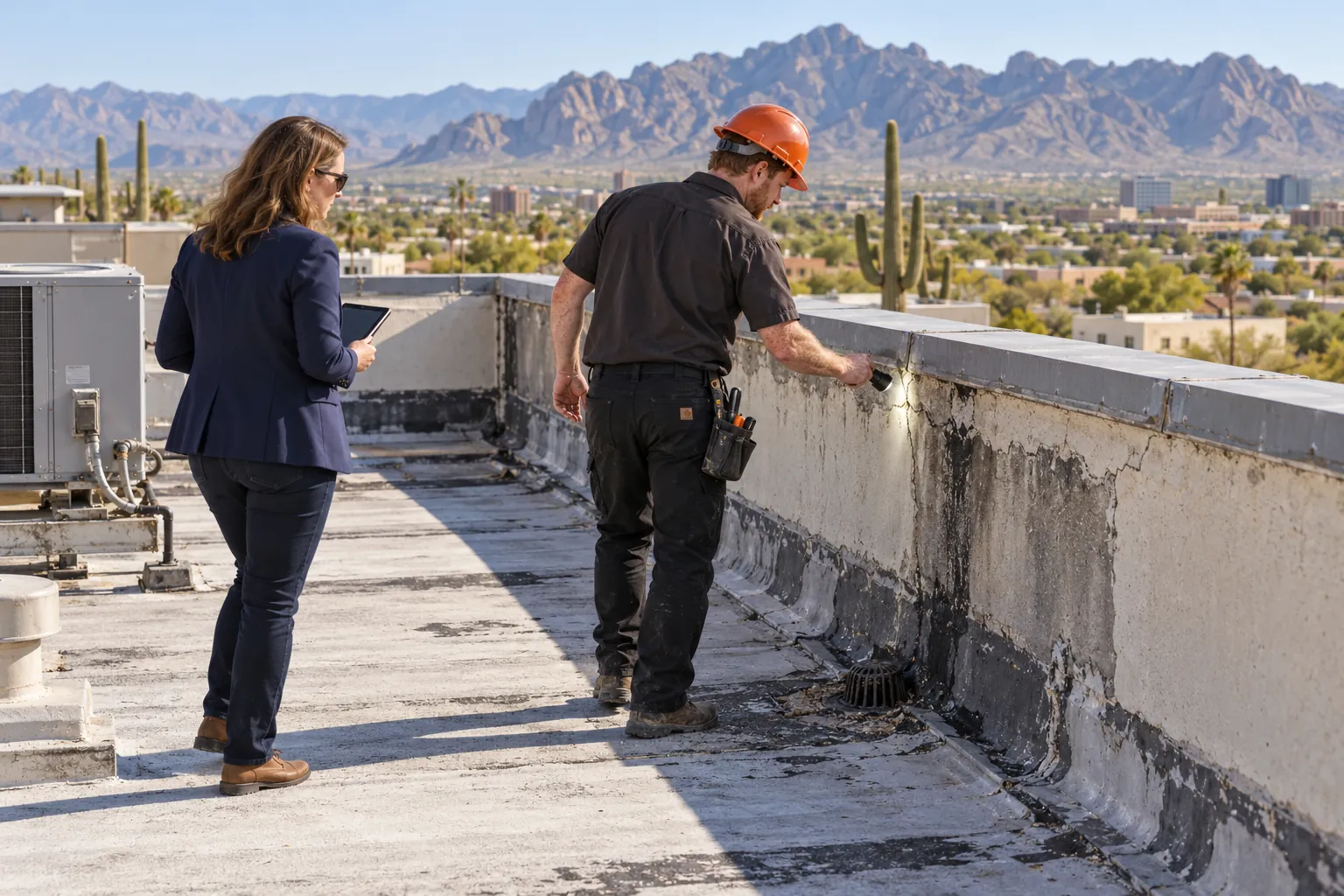
When a stain shows up far from any seam you can see, leak tracing finds the entry point before the flat roof is cut open.
Commercial roof leak repair in Tucson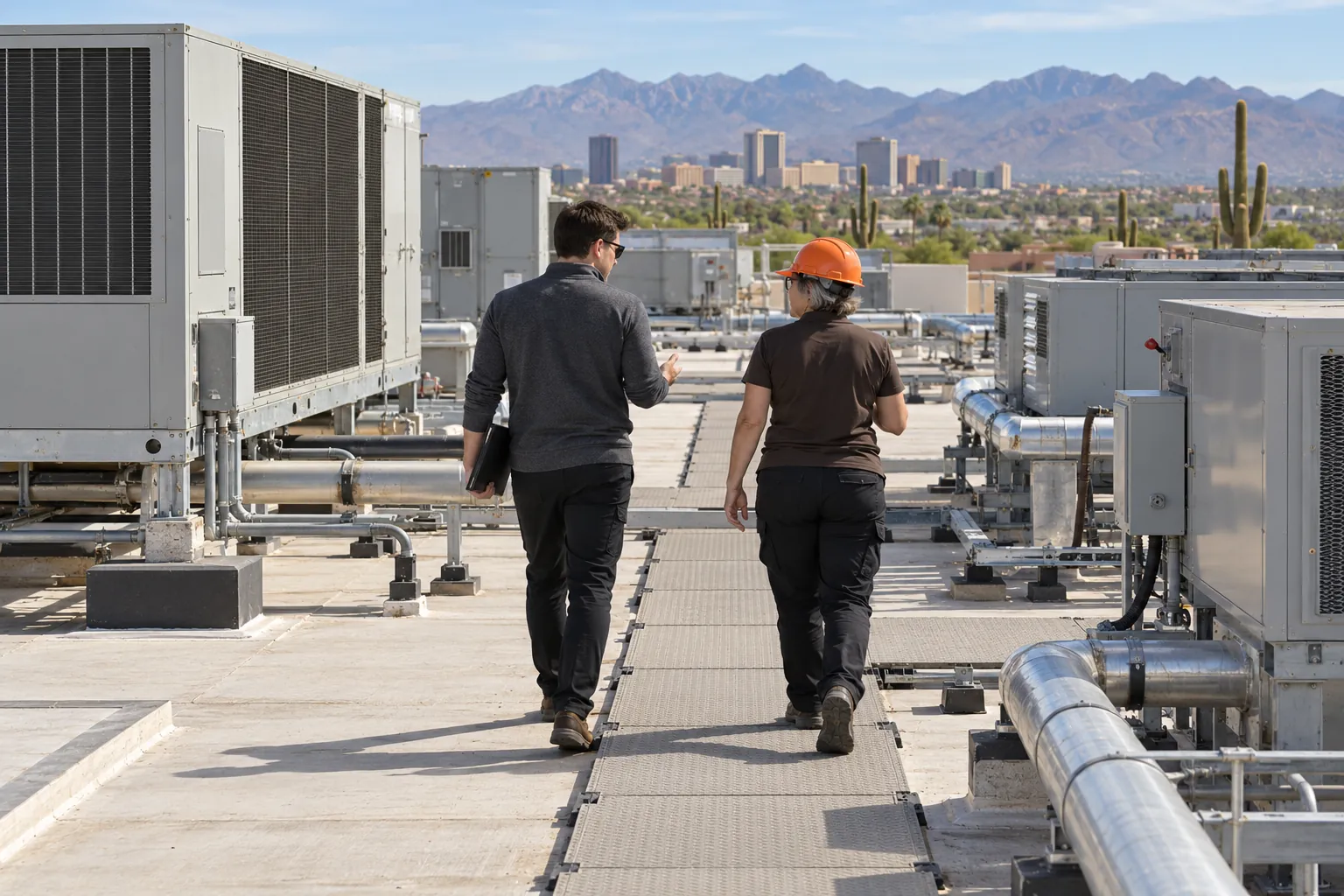
Plant and warehouse flat roofs with exhaust fans and walk pads get repairs scheduled in sections around production.
Industrial roof repair in TucsonAt edges and openings, where the membrane meets something else. Sun-dried seams, drains and scuppers packed with debris, curbs under rooftop units, cracked parapet stucco, and flashings at pipes and wall transitions cause most flat roof leaks here, so repairs start at those details before the open field.
Yes. TPO patches are cut from new TPO membrane, cleaned, primed where the manufacturer calls for it, and heat-welded to the existing sheet. Asphalt mastic does not bond to TPO for long, which is why old tar patches on white roofs keep leaking.
Trapped moisture or air between the plies expands in the afternoon heat and lifts the top layers. A blister that is intact and dry gets marked and watched. One that has cracked open lets water in and gets cut out, dried, and patched.
Clearing and resetting the drain fixes most ponding. When water still collects, tapered insulation or a cricket around the drain moves water toward it during the repair. Ponding across a whole section usually means a deck or design problem that needs more than a repair.
Repairs go on year-round, with work moved to morning hours in the hottest months. Heat-welding TPO and setting asphalt plies both work well in warm weather, and repairs before July give seams time to set before monsoon storms.
Only if the membrane is in good shape and the coating is compatible with it. A coating over a roof with wet insulation traps the water, so moisture readings come first. For many flat roofs, repairing the details is the better spend.
Send the address and where the leaks show up inside. We will inspect the flat roof and lay out the repair.
Leave a name and number and we will call to talk through the leak or repair.
Or call now: (623) 310-0116